
by Sofi-Nicole Barreiro, M.A., and Michael J. Bustamante, Ph.D.
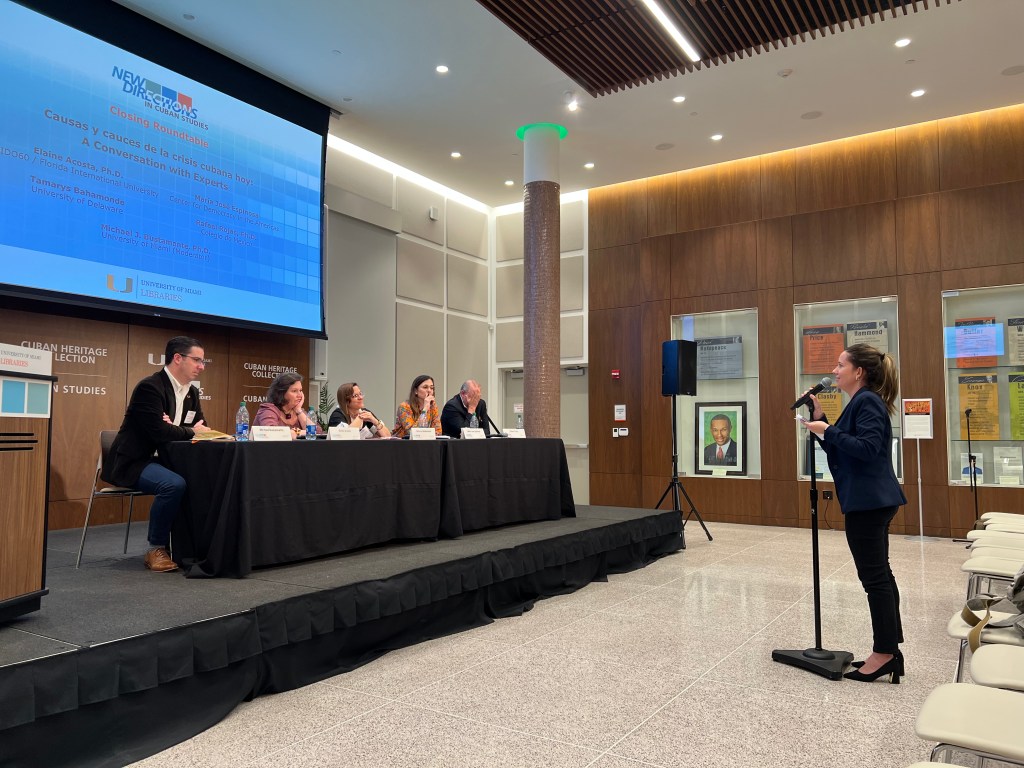
From October 18-20, CHC hosted the fifth edition of New Directions in Cuban Studies. Launched in 2014, the biennial, multidisciplinary conference provides a platform for graduate students and early career scholars to share new research in the field, including research drawing on collections at the CHC.
However, given tumultuous events in Cuba recently (a sharp economic downturn, renewed tensions in U.S.-Cuban relations, Covid-19, and sharp expressions of citizen discontent, to name just a few), this year’s event was devoted to a specific theme: the contours of the multifaceted crisis Cubans are experiencing today. Over two days, scholars from fields like literary and cultural studies, anthropology, and sociology shared novel perspectives on daily economic realities, migration, the evolving digital landscape in Cuba, and artistic and sonic expressions through which Cubans are reflecting on their country’s fate.
This theme also gave CHC an opportunity to close the conference with a panel of invited experts for the benefit of junior scholars and the wider public audience in attendance (watch video). Titled “Causas y cauces de la crisis cubana hoy,” the final session brought together specialists on Cuban politics, economics, society, migration, and foreign policy to share broader viewpoints on current Cuban affairs. Despite focusing on different areas, panelists Tamarys Bahamonde, Dr. Elaine Acosta González, María José Espinosa, and Dr. Rafael Rojas all agreed that Cuba’s crisis today is not monocausal or limited to one sphere of life; its origins and effects are multifaceted and deeply intertwined.
Bahamonde, a well-regarded Cuban economist currently pursuing a PhD in public policy at the University of Delaware, initiated the conversation by underscoring the systemic nature of Cuba’s current crisis—inclusive of, but not limited to, the economic situation. While external shocks such as the Soviet collapse, the financial crisis of 2008, or renewed U.S. sanctions and Covid-19 more recently) serve as triggers for economic recession, they are not, she insisted, the root causes for the depth of the island’s difficulties today. As Bahamonde explained, since the 1990s, Cuban authorities have consistently failed to implement the comprehensive reform roadmap necessary to put the economy on stronger footing and in a stronger position to respond to external shocks. This points to not only problems of economic vision, she argued, but also a model of political decision making that is not serving national interests. In this way, the crisis is as much political as economic, and this has contributed to a broader crisis of legitimacy for authorities.
Dr. Acosta González, a visiting scholar at Florida International University’s Cuban Research Institute, complemented the discussion by pointing to the deep social effects of Cuba’s current economic difficulties—particularly inflation and the scarcity of goods. She called attention to the vulnerability of the elderly (normally on fixed state pensions for incomes) and the relative lack of official government preoccupation or response. Dr. Acosta González also commented on regressive normative and political changes with respect to goals of social justice and equality, noting how more care and protection responsibilities for the elderly and socially vulnerable have been transferred from the state to individuals, per new terms in the Cuban Family Code passed in 2022. Simply put, regressive social policy in Cuba amidst a backdrop of food insecurity, medicine shortages, and declining citizen purchasing power has contributed to worsening poverty and social inequalities.
Shifting the topic of conversation from the island to a more regional and bilateral context, Espinosa, the executive director of the Washington, D.C.-based Center for Democracy in the Americas, deliberated on the historic exodus of Cubans from the island since 2022, mostly by air routes to Central America and then an overland journey to the U.S.-Mexico border. Espinosa argued that the intensification of U.S. sanctions since 2017 has absolutely had an impact on the national economic situation and is thus one ongoing contributor to the push factors of migration. Moreover, Biden administration moves to alleviate some restrictions on travel and remittances have been far too limited in scope to seriously change the economic equation on the ground. But she echoed her colleagues in stating that migration from Cuba, like the wider crisis of which it is a symptom, is a multifaceted phenomenon driven by internal as well as external factors, including domestic economic failures and sharp political frustration on the part of the population. Espinosa likewise emphasized regional factors at play—like the effects of Covid-19 on other Latin American economies, thereby leading to a secondary migration of Cubans in South America to the United States. Finally, she offered insights on the shifting and somewhat haphazard treatment of this historic cohort of Cuban migrants under U.S. immigration policy to date.
Dr. Rafael Rojas concluded the panel by considering Cuba’s place in the world today. An aggressive diplomatic agenda over the past year, he argued—including visits by Cuban leadership to several foreign capitals, as well as an active role in the G77—is a sign of a government seeking new economic lifelines, but also the projection of international support to counteract a domestic crisis of legitimacy. In the aftermath of historic protests on July 11, 2021, a pronounced tension between greater flexibility on the economic front (with expanded space for Cuba’s private sector, for example) and increased political control seems to have taken shape. But given the ongoing economic, political, and social problems discussed by other panelists, this balancing act has not yet succeeded, and the crisis shows few signs of abating.
Cuba is no doubt at a trying crossroads in its history, one that generates many comparisons to the so-called “Special Period” of the 1990s. We hope New Directions in Cuban Studies 2023 has contributed to a better understanding of multiple contemporary challenges, their historical roots, and possibilities for change. We invite you to re-watch all panels from the conference via the CHC’s Facebook page: facebook.com/umchc.
 Cuban Heritage Collection Blog