
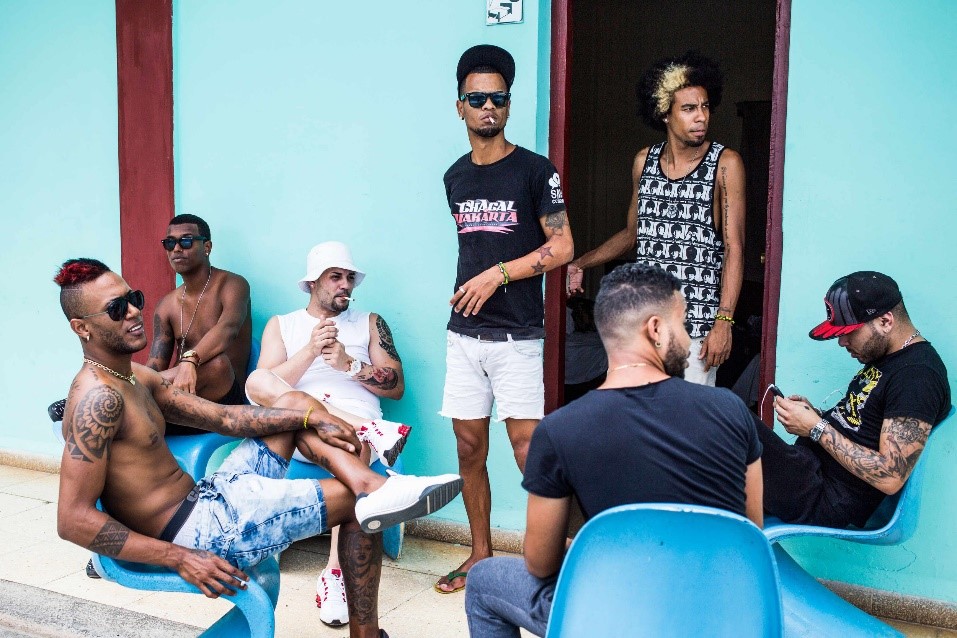
Last year, the Cuban Heritage Collection acquired a series of photographs by Lisette Poole documenting contemporary Cuban migration; the reggaeton scene on the island; and LGBTQ+ experiences of daily life in Cuba. CHC’s Curator, Dr. Elizabeth Cerejido, spoke with Poole about her work in Cuba and storytelling process. Prints of Poole’s work are available on her website.
How would you describe your practice as a photographer? What informs how and when you shoot a particular scene or moment?
Two things are happening: I am being social and gaining trust, while also being cognizant of my role as a documentarian. I enter the situation as a guest, not feeling entitled to be there or photograph. I ask permission, sometimes non-verbally: I put the camera down, I make eye contact. I continue to talk to people about what I’m doing while I work. It’s also my priority to be human and connect. Ethically, I want to be clear that I am there to document, that boundary is important but I also want to relate to them on a friendly level — it becomes a dance between those two things: the humanity of being present and doing my job.
You studied photojournalism and you have also described yourself as a storyteller. I’m interested in how your various roles as image-maker (photographer), storyteller (writer), and documentarian, function in your work/your process?
Using multiple mediums has expanded my ability to tell stories and document history with a goal: I want to make people care about something they might not normally care about. In Cuba, I gauged what was important by finding topics that mattered to my friends and neighbors. I’ve read that we remember moments in our lives where strong emotions are attached to the memory, I want that to happen when someone experiences my work. Using words, images and other mediums makes it easier since I have a wider range of tools to work with.
I often think about the people documenting history, and who are telling our stories. I hope my projects will become historical documents, that’s why the CHC acquisition of these prints meant so much to me. It’s powerful to have a voice in the records of Cuban events. Especially since we know that for a long time we were being fed predominantly white, wealthy, and colonialist views of history.
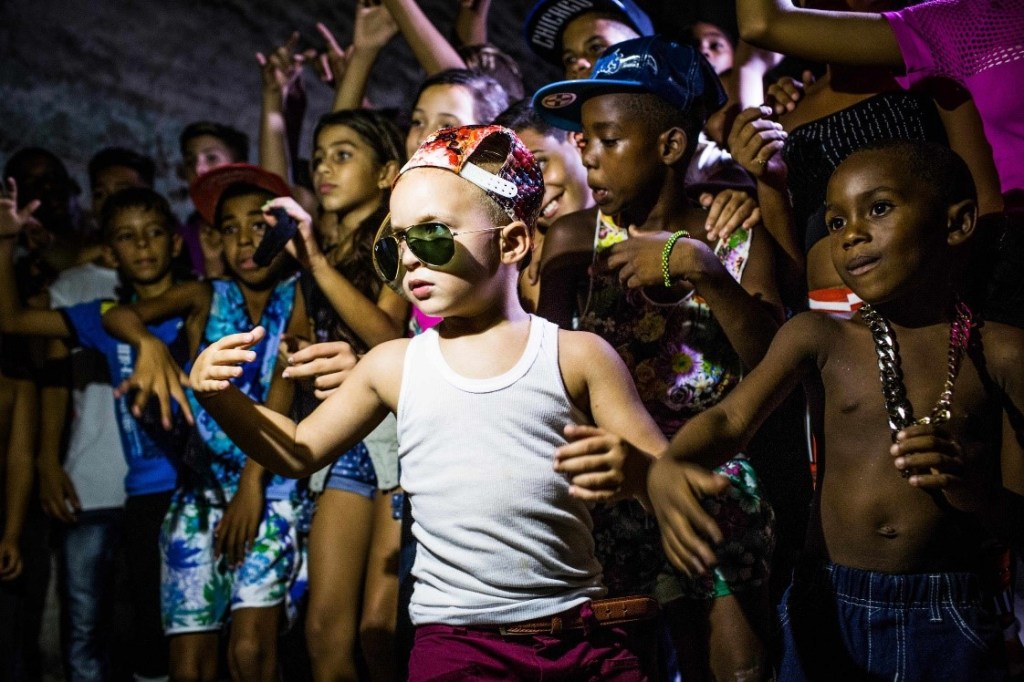
One of the aspects of your work that I find so striking and strong is your use of color. There’s a particular aesthetic, evident in the Reggaetón series which is not there strictly as an aesthetic device to either heighten or exaggerate, but rather to insinuate, to reveal, to point the viewer to a particular moment that itself is revelatory, which says something about the subject that is at once intimate and bold. Can you elaborate on that aspect of your work?
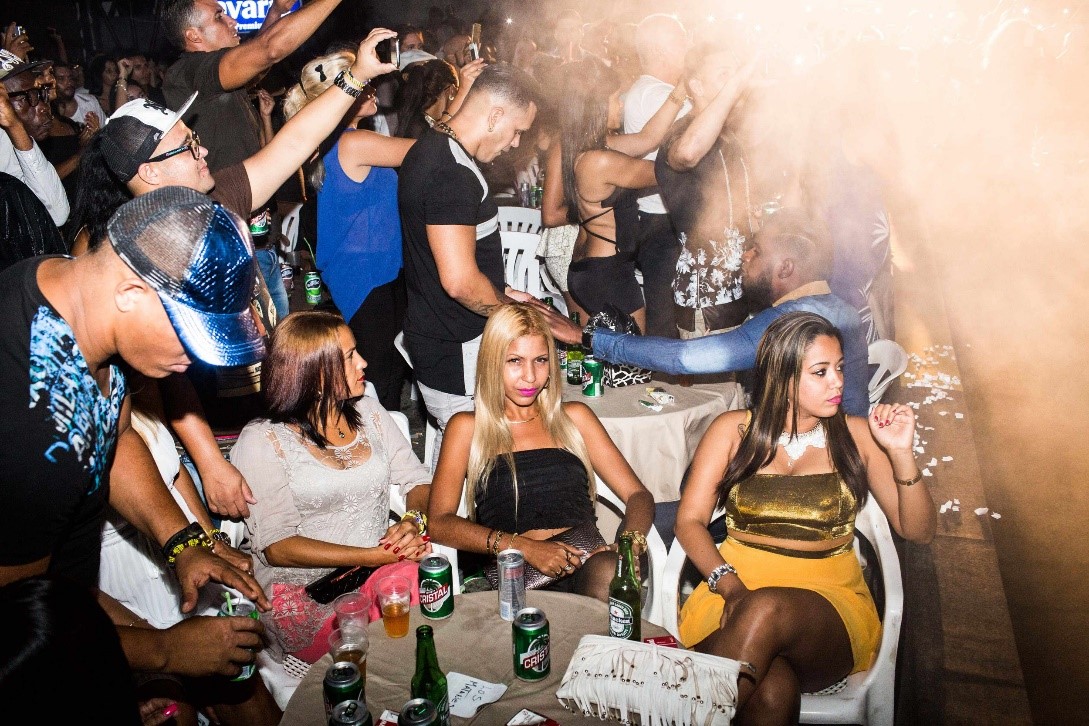
Reggaetón talks about Cubans’ desire, it is that desire that brings even the printed photos to life. At the music video sets and concerts I photographed, that desire was apparent, for things, wealth, and change. The scenes were vibrant against the backdrop of the tropics.
The story encompasses so much: themes of economic disparity, patriarchy, politics, censorship, capitalism, gender roles, youth culture, and more. There was so much going on that I wanted to let the photos speak for themselves.
When it came time to make our documentary, we chose to focus on El Paquete, and how the music was disseminated offline to circumvent censorship. We could have easily made a feature length documentary about the nuances of Cubatón’s effects on Cuban society.
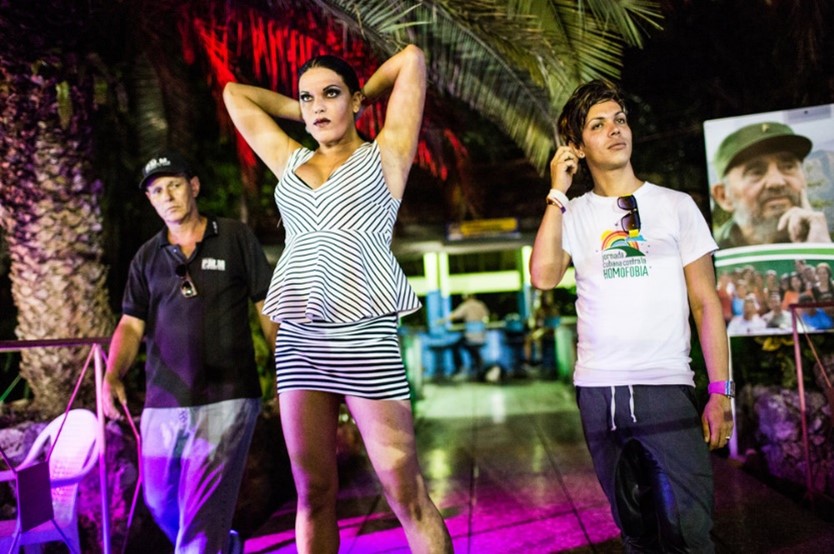
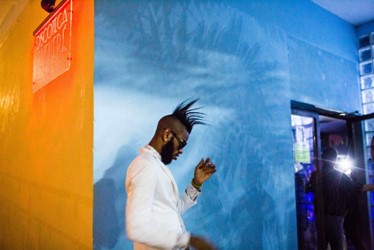
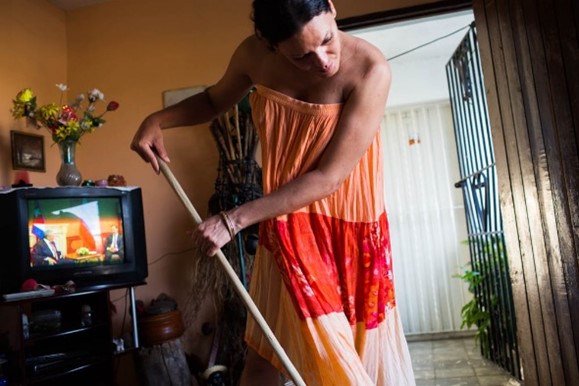
The sense of intimacy I mention above is also present in the body of work documenting Kiriam from your LGTBQ series. Here, too, the viewer gets a sense that she is being shown or let in to scenes from everyday life that at the same time are revelatory, at times difficult to witness (I am here referring to the physical changes that come with the process of transitioning from one gender to another). Talk to us about that access. Where are you? Where is the camera? I’m curious about how you access these intimate spaces with your subjects to such an extent that the viewer forgets you and the camera are present. Of course, that is the sign of a great photograph, particularly in the kind of fine-art/photojournalistic work that you do.
Thank you.
In the relationship between me and Kiriam, the camera was always a third participant. It worked because she understood what I was trying to do. And the intimacy was available because of her openness, it was all Kiriam. I was a newish photographer and had not started working professionally when I met her. I found her story compelling because I knew that LGBTQ bars and clubs had been illegal in Cuba just a few years before (we met in 2012), and yet she was making a living lip-syncing on stage, and she was bold: she had attitude, she made out with men in the audience, it was unexpected for me. It was something I thought I might see in my hometown of San Francisco, not Cuba. I knew that if I could be surprised by it, as someone who knew more about Cuba than most — then other folks would be surprised by it, too.
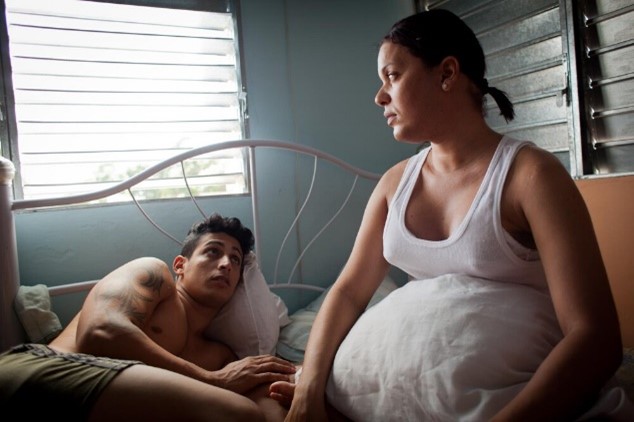
Back at her house, the camera was not a barrier to intimacy but rather a vehicle to get closer to her — it gave me a reason to be there, and witness. Kiriam and I became close over the years. And it can be a beautiful thing when you get to know someone in this particular way: you are there to document their life. Because even though we became close, I still leaned-in to the challenge of taking photos in those intimate and quiet moments, sitting on the bed with her, getting as close as I could, filling the silence with a shutter click. There is something poetic about that particular kind of discomfort or awkwardness, it makes me feel completely present. Maybe photography is impactful because of that, it gives each moment purpose, giving meaning to a mundane experience, like sweeping the floor.
Kiriam taught me a lot about how I wanted to work. She taught me a lot about gender. She has a powerful and authoritative presence. And she’s very influential in Cuba —an iconic figure in the queer scene. She has lived through each side of the spectrum of the queer experience: from where her existence was illegal, running from police, doing sex work, and then fighting for LGBTQ+ rights alongside Mariela Castro. She is an actor, activist on HIV and trans issues, and a performer. She has a lot to teach people about Cuba and its place in the world through the lens of LGBTQ+ rights. She is also a beautiful writer.
My dream would be to publish these photos alongside her words and experiences one day.

Your mother is Cuban and your father Italian-American and you grew up in California. Therefore, you were not directly exposed to the politics of the exile community in Miami which tend to dominate the narrative on all things Cuban. Describe what it was like growing up as a Cuban American in that environment.
For my family, being Cuban was the most important fact for us. Without the Miami scene of Cuban food, accents, and politics, my family made it a daily point to hold onto their culture.But we also had the freedom to be whatever version of Cuban we wanted to be, since there was very little reference to it outside of our small family.
Later, when I moved to Cuba, things made sense. I felt connected to people there because my family had raised me the same way. In California, I had experienced my own version of losing my identity —code-switching to fit in. Living in Cuba allowed me to connect to a lost part of myself. My work in Cuba is an extension of that: a way to be in touch with lost parts of myself and the women who raised me.
I hope to get back and continue my work soon.
As you know, Cuba in the context of photography, has almost become a trope. We are inundated with images of American cars, the city in ruins, etc. Yet your photography goes beyond these stereotypical scenes to capture other stories, that as I mentioned earlier, reveal the human dimension of Cuban life in a way that is both specific to that context, yet universal. For example, there is a running commentary on gender and gender roles, yet it is never didactic or gratuitous. Can you speak to that aspect of your work?
Cuba is a polarizing topic. For anyone who researches or documents Cuba, it can be frustrating to have to fit-in to an over-simplified dichotomy about anything related to the country.
I wanted to reveal the inner worlds of the people I photographed through the images, breaking down the separation and creating a relationship between the viewer ad the subject of the photo, so that a nuanced conversation could take place —one that sublimated the black-and-white discourse on Cuban politics and allowed space for a relationship to occur with a complex place like Cuba.
I talk a lot about gender roles and my relationship to the patriarchy in my essay “The Beautiful Disappearing.”
Finally, are there particular images from the series we acquired that you want to elaborate on, that resonate in a particular/personal way for you? And what does it mean for your work to be in an archive like the Cuban Heritage Collection?
The series from my book, La paloma y la ley, is particularly valuable to me, I am honored to know that my photos and my book now live alongside the artists and storytellers of Cuban history.
When I made this book, I considered it a textbook and I wanted it to be studied. Because I felt the women in the story were important, they gave a poignant example of the Cuban woman that was often missed. Liset and Marta personify an inner strength and confidence that I have always deeply admired in Cubans, especially women.
I also want to empower other storytellers with this project to tell stories that matter to them.
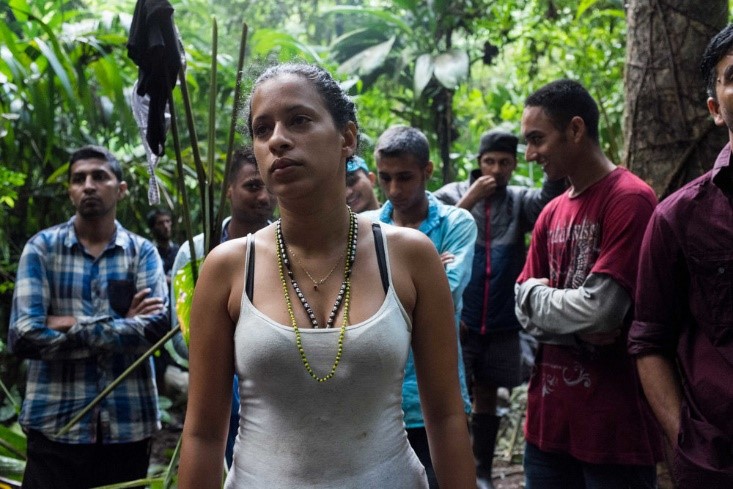
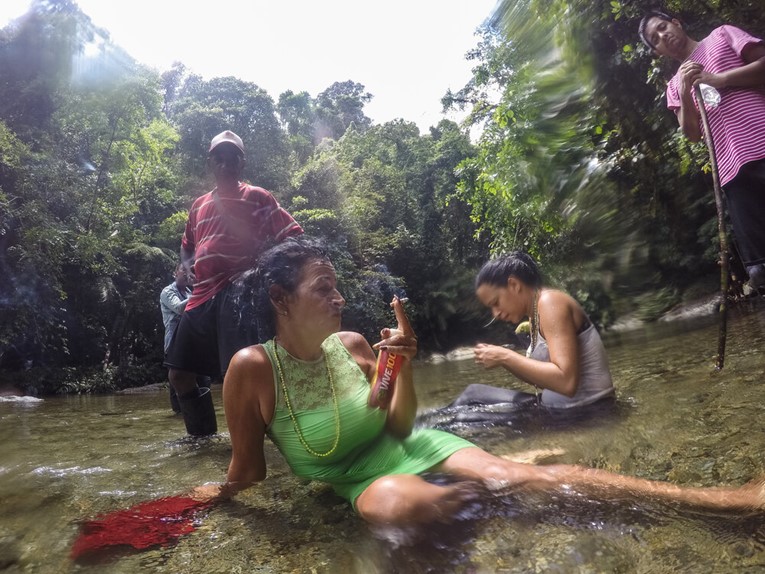
Migration has always been a predominant fact of Cuban life and as we’ve seen recently, it’s becoming even more relevant. I felt there was no way to talk about the Golden Era of Obama’s re-engagement policy, without showing this phenomenon.
The project has become interwoven with my own life — it’s been over 8 years since the first day I met Marta. To see that the work has had a lasting impact shows that stories have the power to convey truths about humanity, which linger beyond contemporary culture’s attention span, one that seems to grow shorter everyday.
 Cuban Heritage Collection Blog