
By Elizabeth Cerejido, Ph.D., Curator for Cuban Collections
Highlights from exhibit currently on view: “The CINTAS Foundation: An Archival Perspective“
The medium of film and video, like photography, has a documentary function, and in the context of the archive, audiovisual records have historically served as important and reliable resources of information. Contemporary artists have also long exploited the moving image’s capacity to tell stories; an effective visual mechanism for creative expression and social commentary. This is evident in the film works on view at the CHC by CINTAS Fellows, Lisandro Pérez-Rey and Coco Fusco, respectively. Both film projects were made in response to or inspired by political events.
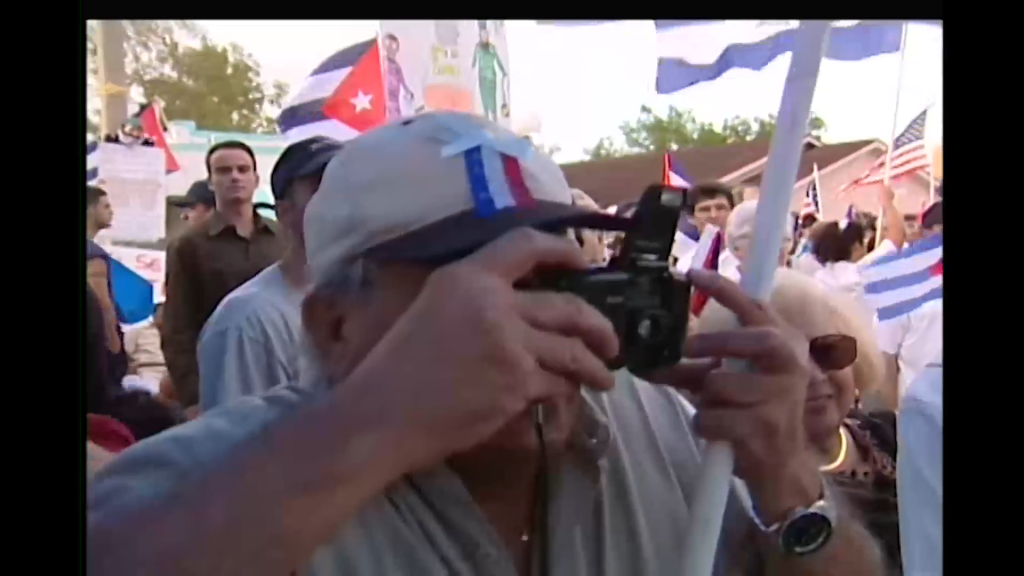
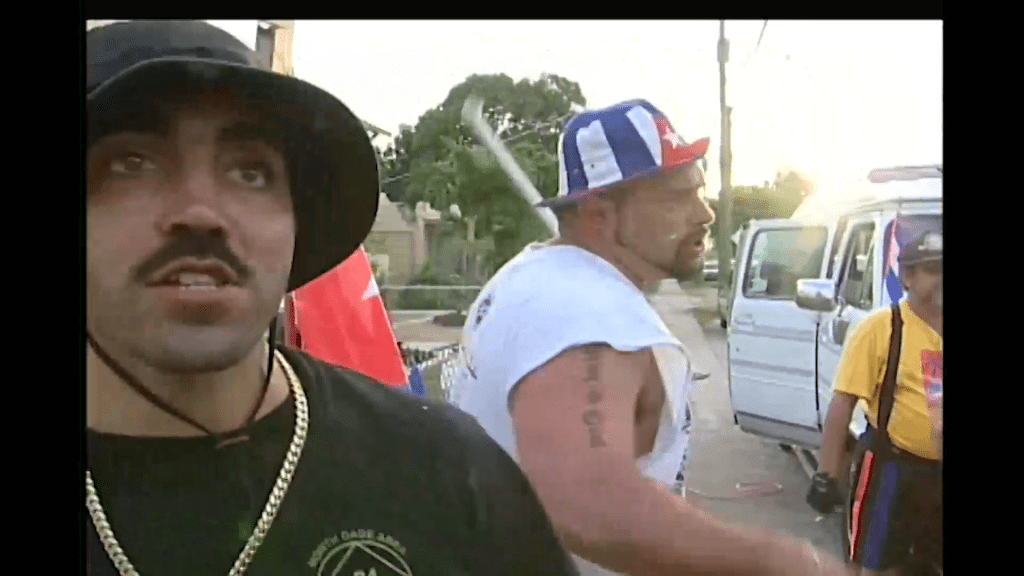
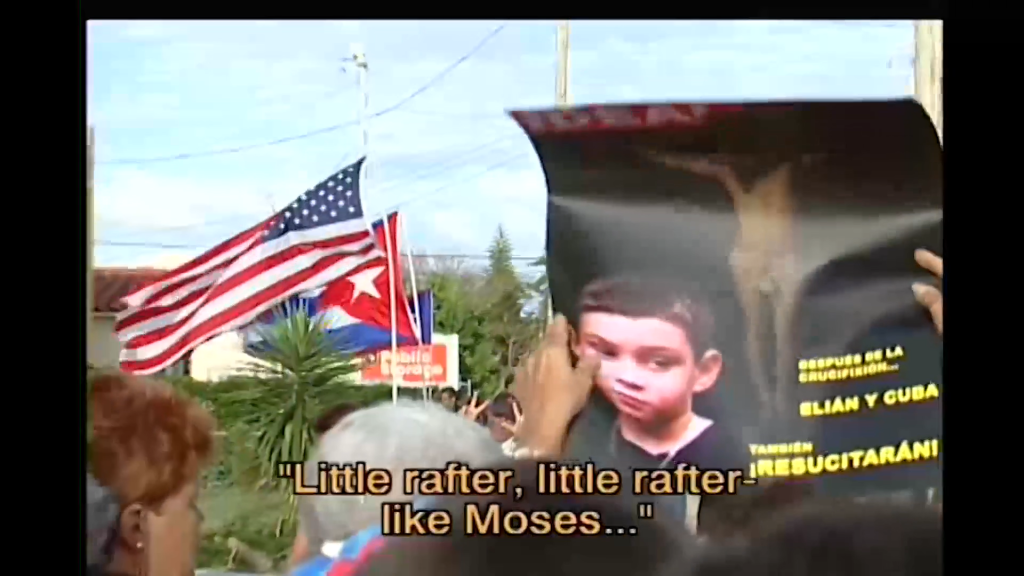
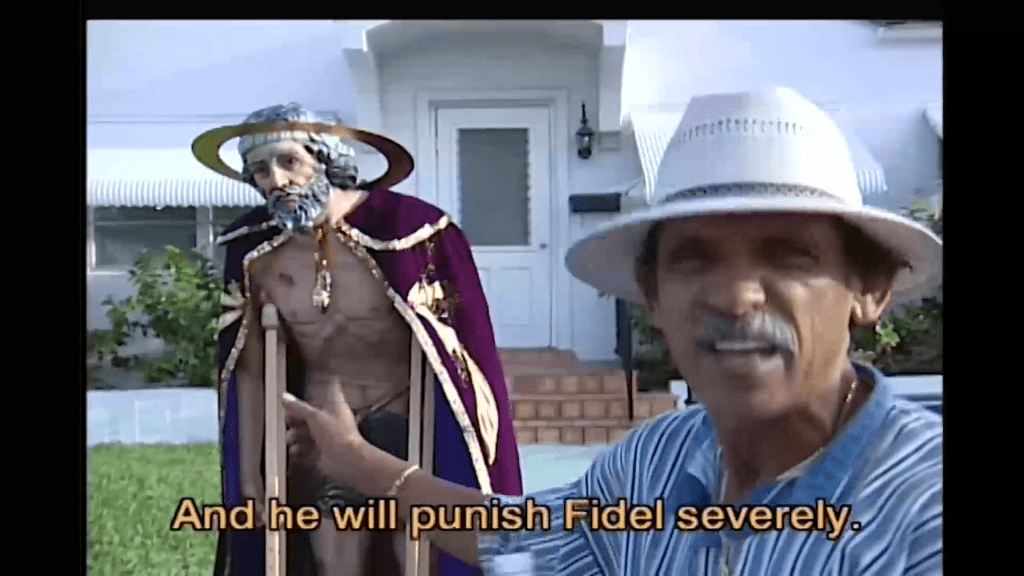
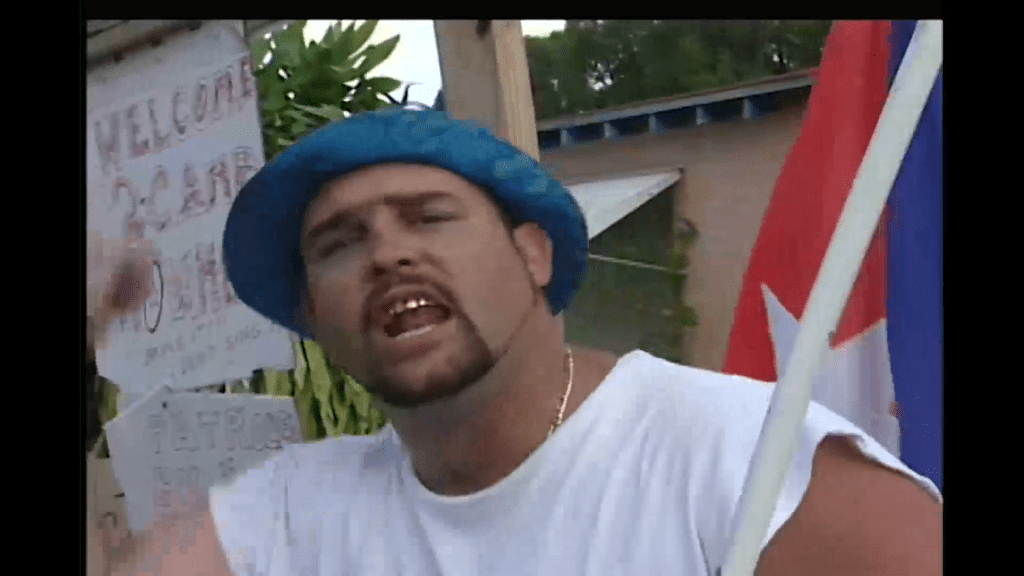
Lisandro Pérez-Rey’s short untitled documentary was filmed outside Elián González’s family home in Miami on April 15, 2000, less than a week before Elián was taken by federal agents in a pre-dawn raid on the house. As a boy, Elián was at the center of a custody battle in 2000 that set off a crisis in Cuba-U.S. relations. The issue of whether Elián should remain in Miami with his relatives (after enduring a harrowing journey at sea with his mother and other family members who perished in the crossing), or be returned to Cuba where his father lived, further polarized Cubans on the island and in Miami’s Cuban exile community. The case became a rallying cry that served the political agendas of these opposing groups. The street outside his home and the neighborhood at large became an impromptu site for public protest and local support of Elián and his family. The subsequent decision by the Clinton administration to return the boy to his father in Cuba prompted massive protests in Miami and served to destabilize the established perception of a monolithic Cuban community.
The video is part of a generous donation by Pérez-Rey to CHC of his film projects related to Cuba. Included are raw footage and master files of films such as Beyond the Sea (Mas allá del mar), a history of the Mariel boatlift told through the personal stories of those featured in the film; La Fabri-K (The Cuban Hip-Hop Factory), as well as of unedited film projects.
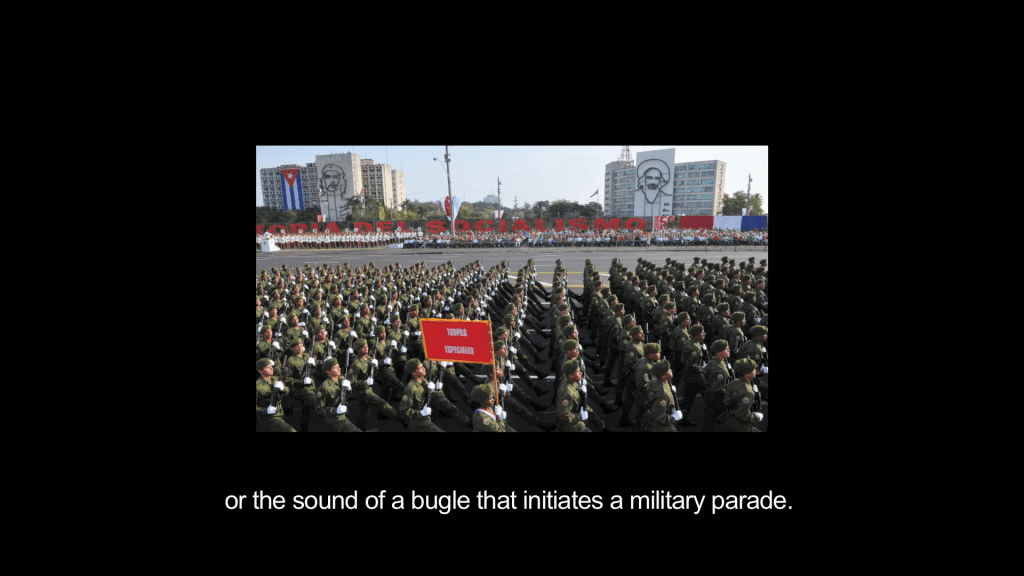

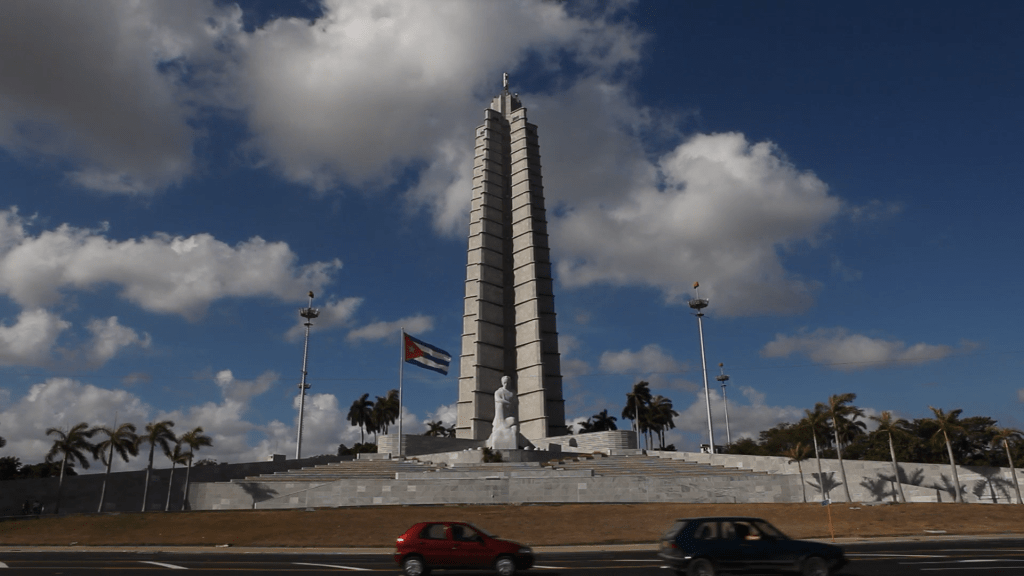
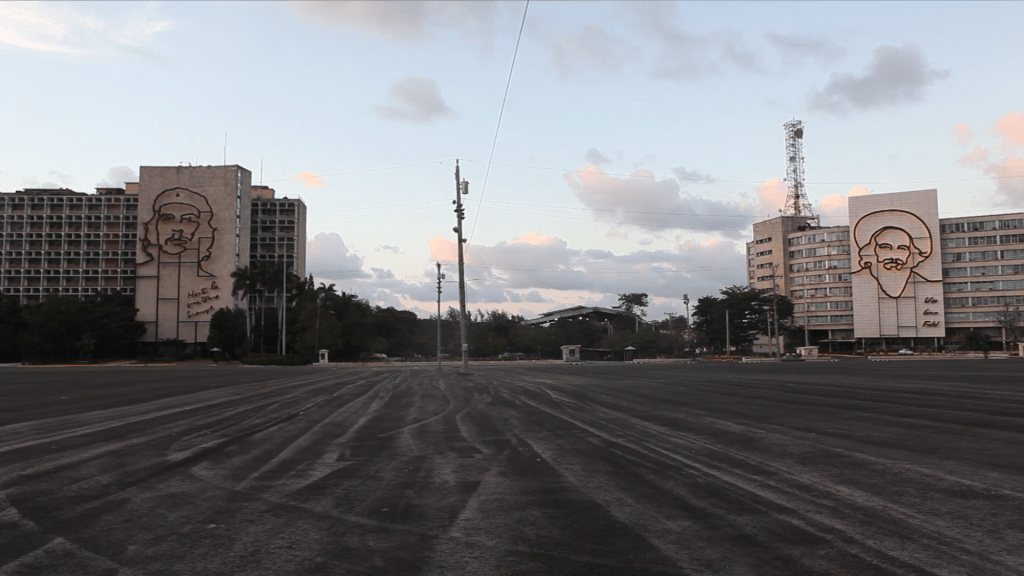
Coco Fusco’s “La plaza vacía” [The Empty Plaza] (2012) is a commentary about the uses of public sites, inspired by the events that took place across the Arab world in 2011. Fusco turned her camera to Havana’s Plaza de la Revolución, a public square that the artist describes in the work as “a stark, inhospitable arena where all the major political events of the past half-century have been marked by mass choreography, militarized displays, and rhetorical flourish… an empty stage filled with memories.” In the context of Cuba’s communist government, in which individual or mass protest is quashed by the state, the “empty plaza” stands as a poignant metaphor for the failures of revolutionary promise. The film includes archival footage of various events that have taken place at the plaza since 1959, adding to the video’s historical dimension, with voice-over narration by Yoani Sánchez, an internationally recognized journalist and dissident based in Havana.
Each video, in interwoven and parallel ways, are thought-provoking commentaries on the intersection of public sites, protest, and civil engagement (sanctioned and not) for Cubans in exile and on the island.
 Cuban Heritage Collection Blog