
The Cuban Heritage Collection will be featuring highlights from Goizueta Fellows’ research investigations conducted during their fellowships. Armando Navarro Rojas, (@mandy_doce), shares the following about his research on Caribbean literature and cinema:
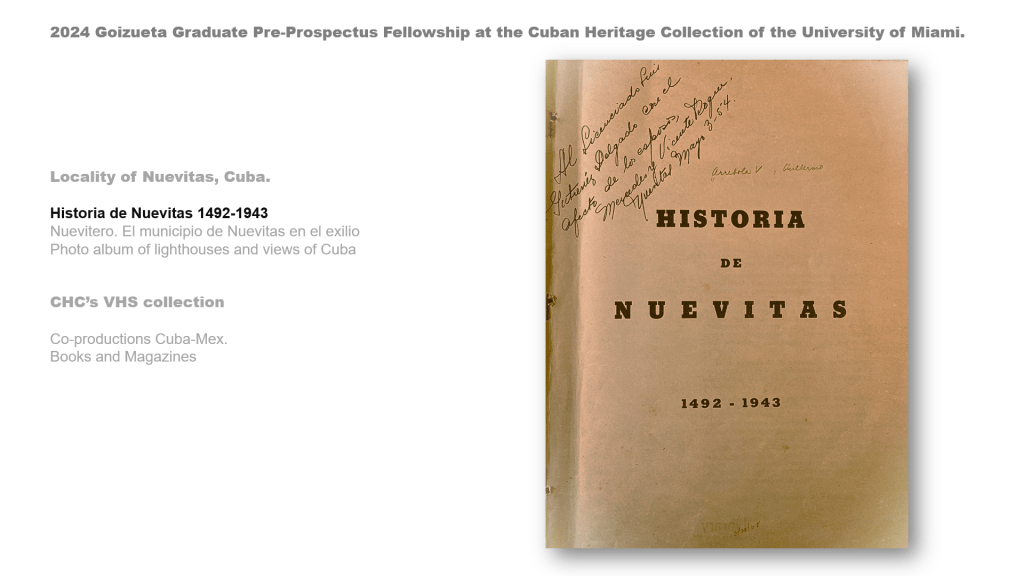
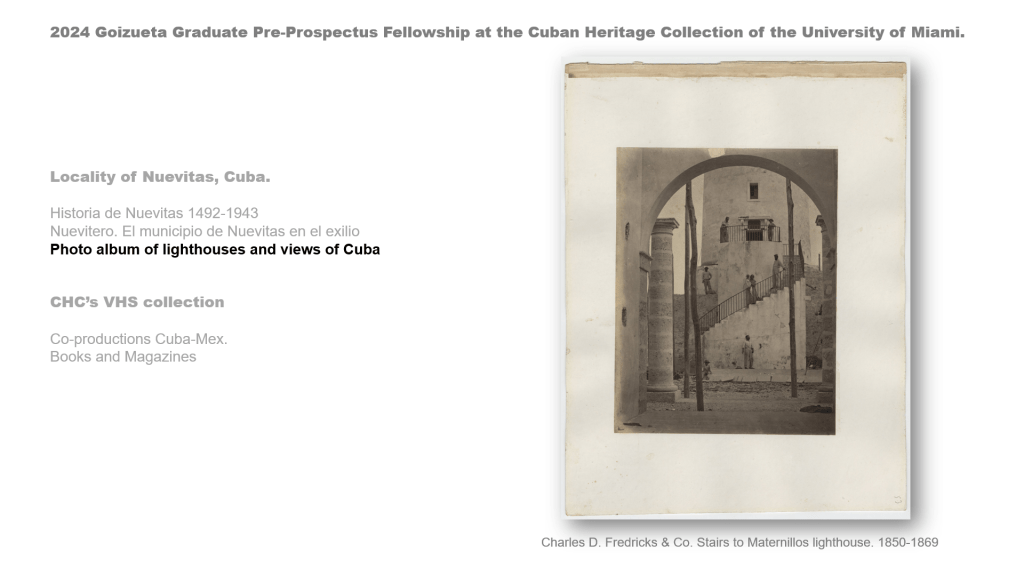
“My initial approach to the collection, without prior knowledge of the specific contents of the archive, focused on the locality of Nuevitas, Cuba. The interest in this territory lies in analyzing how the socialist-modern discourse, of hegemonic and totalitarian orientation, transforms the geographical, political, social, and cultural space of Nuevitas. In this regard, I was able to meet my objective by consulting the first editions of works by local writers Miguel Mejides and Enrique Cirules. I also accessed materials (newspapers, books, and photographs) that cover two periods and territories not prioritized by the official post-1959 Cuban narrative (Republic and exile), which I had not previously consulted in other archives: Historia de Nuevitas 1492-1943 by Guillermo Arrebola, a photographic archive of maritime, port, and religious infrastructures, and finally, the newspaper Nuevitero, published in Miami by the Municipality of Nuevitas in Exile.
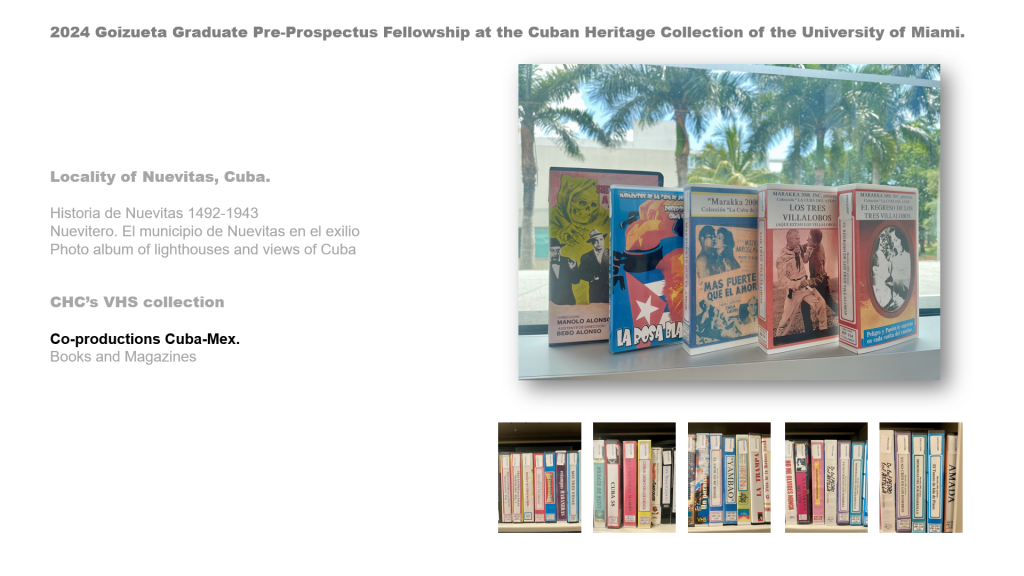
Additionally, I had access to the CHC’s VHS collection, which includes films from the 1940s and 1950s, a period of significant growth in Cuban cinematography before the establishment of ICAIC (Instituto Cubano del Arte e Industria Cinematográficos). This cinematography consists mostly of co-productions with Mexico, a country that, at the time, was experiencing the peak of its Golden Age of Cinema. However, despite their importance in terms of volume and reception, these co-productions have not received critical attention that goes beyond the value judgments associated with commercialization and the taboo of banality often attached to studio and commercially oriented cinema. From a traditional historiographical perspective, they are not considered fruitful examples of Mexican cinema from the era, nor have they been thoroughly studied from the Cuban side, as Cuban cinema prior to ICAIC has received little attention. These films are accompanied by magazines and newspapers (general magazines) that, from the perspective of the star system and film production, document the emerging Cuban film industry in the first half of the 20th century. This section also includes select and rare publications (books) from post-1959 that address not only this body of work but Cuban cinema in general produced during that period.
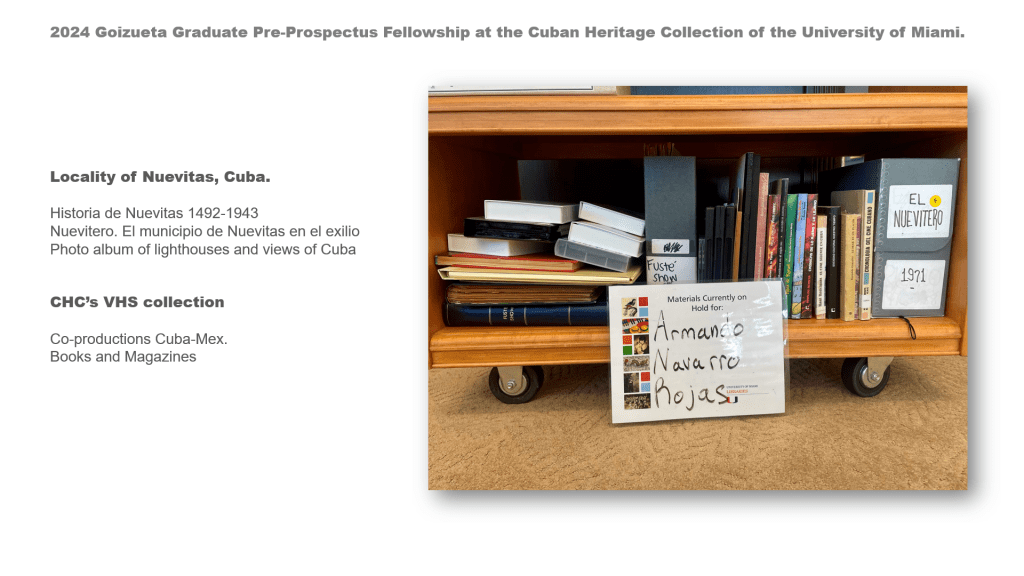
Finally, the fellowship allowed me to delve into the section dedicated to Cuban literature, which is vital for my oral exam as part of the process of obtaining my Ph.D. in Hispanic Studies at the University of Pennsylvania.
I would like to take this opportunity to express my sincere gratitude to the team that makes the work of the archive possible, whose dedication and passion not only made my time there productive but also thoroughly enjoyable.”
 Cuban Heritage Collection Blog