
The Cuban Heritage Collection will be featuring highlights from Goizueta Disntiguished Presidential Fellows’ research investigations conducted during their fellowships. Ruthie Meadows, Ph.D. shares the following about her research on the often-overlooked contributions of Cuban women to the history of jazz and jazz fusion.
Cuba offers a site of immense importance for the history of jazz in the United States and globally. Cuban rhythms such as the tresillo, cinquillo, and clave grounded the emergence of early jazz in New Orleans in the late-19th and early 20th centuries, and Cuban immigrants Mario Bauzá, Frank “Machito” Grillo, Chano Pozo, and others famously pioneered the emergence of so-called “Afro-Cuban” and “Latin” jazz in New York from the 1940s onwards. On the island itself, jazz also flourished in the pre- and early-revolutionary eras, aided by the artistry of Armando Romeu (director of the famed Tropicana cabaret orchestra), Chico O’Farrill, Felipe Dulzaides, Isolina Carrillo, Numidia Vaillant, Israel “Cachao” López, Chucho Valdés, and others. While Cuba’s influence on jazz has received increasing scholarly attention in recent years, challenging U.S.-centric narratives and better sounding jazz’s ties to the Caribbean and the Americas, the contributions of Cuban women remain underrepresented in popular and academic conceptions of the genre. Nonetheless, Cuban women – especially Black, African descendant, and/or queer women – are vital to the history and contemporary landscape of Cuban and U.S. American jazz.
As the Roberto C. Goizueta Distinguished Presidential Fellow at the Cuban Heritage Collection (CHC) this fall 2025, I had the privilege of using the CHC’s unique and ample archival resources to conduct research for my second book, Experimentalisms in Motion: Cuban Women in Jazz and Fusion (Fusión). The book aims to remedy gaps in jazz history and historiography by tracing the histories of erasure of Cuban women in jazz both on and off the island, instead centering their impact.
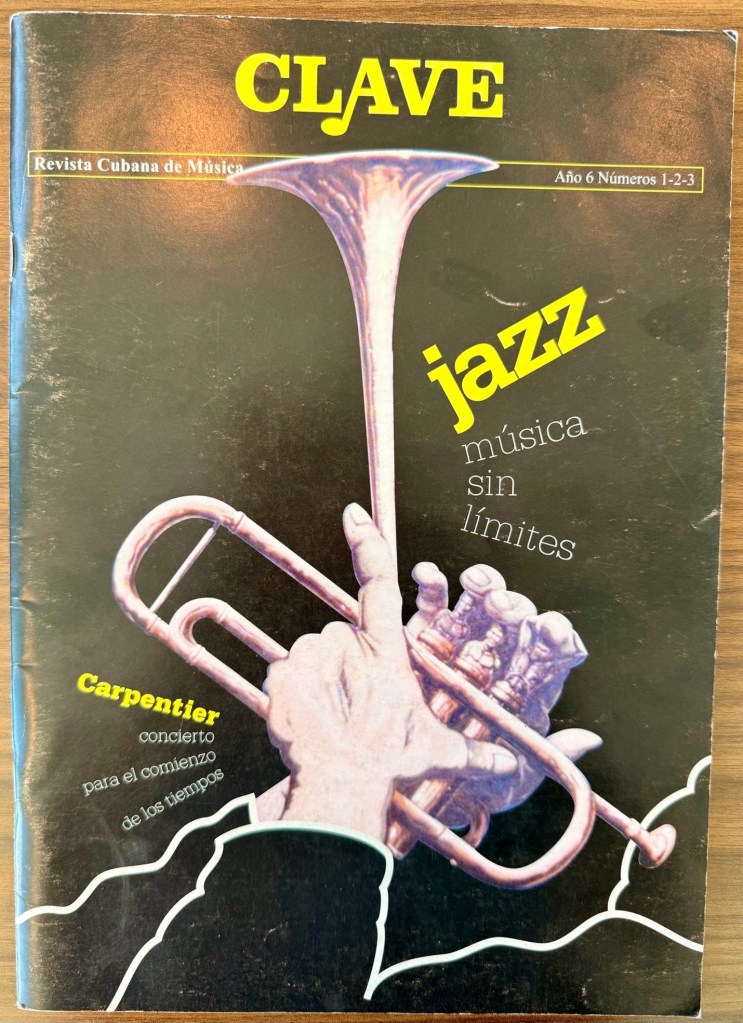
The CHC’s materials proved invaluable to this research, with the Collection’s immense holdings on Afro-Cuban music, Cuban jazz, and women artists of the diaspora (including the John Beltrán Collection; the Yolanda del Castillo Cabello Papers; the Celia Cruz Collection; the Cuban music periodicals Show, Clave, Boletín Música, and others; and ample island-published book holdings and recordings) revealing the rich and often obscured histories of Cuban women protagonists in jazz and fusion scenes of the 20th and 21st centuries.
The Havana-based entertainment magazine Show: La revista de los espectáculos (CHC holdings: 1954-1962), for example, offered an invaluable lens into the famed cabaret and nightclub scenes of Havana at mid-century. Founded by insatiable night owl and lawyer-turned-editor Carlos Manuel Palma, Show bridges the pre-revolutionary and early revolutionary eras from its inaugural issue in 1954, at the height of Havana’s Tropicana cabaret fame, to its final issue in 1962, just three years into the Cuban revolution. Prominent women composers, arrangers, and artists in jazz and other genres (guaracha, afro, canción) jump from its pages, with prominent, often full-page features on the jazz and multi-genre pianists Isolina Carrillo and Numidia Vaillant, legendary vocal star Fredesvinda “Freddy” García, and others.
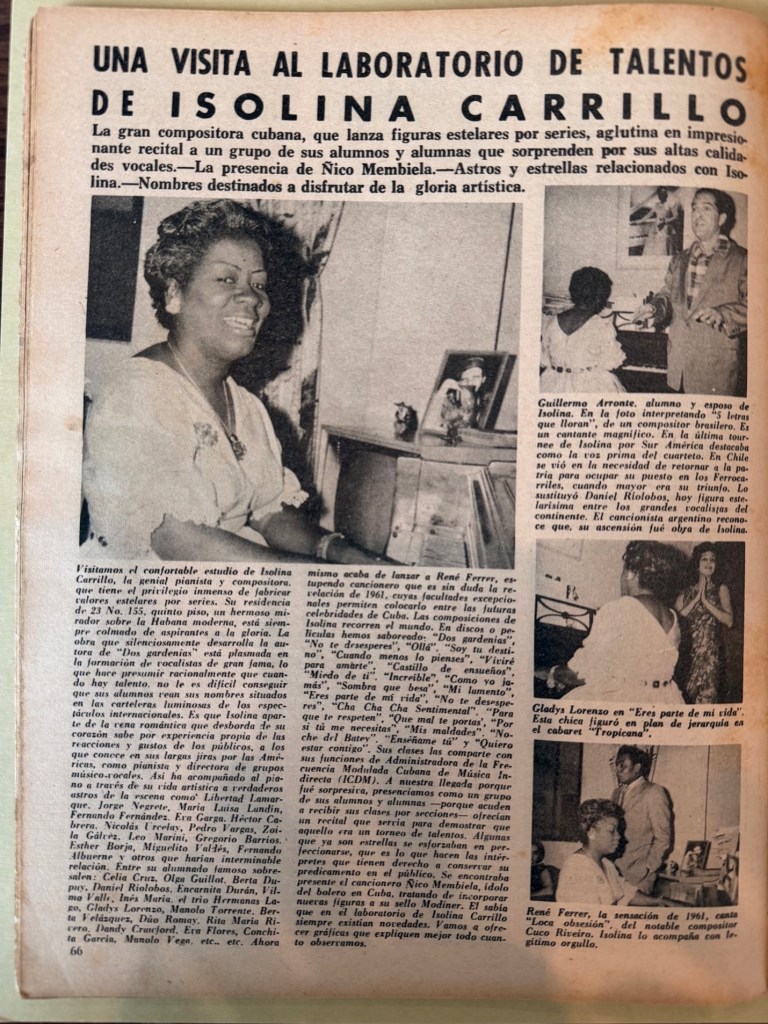
Show’s October-November 1961 issue, for example, spotlights the “Laboratory of Talent” of composer, arranger, pianist, and trumpet player Isolina Carrillo. Known for shaping the careers of such icons as Olga Guillot and Celia Cruz, Carrillo became most famous for her 1945 bolero, “Dos Gardenias,” which would become a standard in Cuba and beyond. Carrillo was also one of the few women to play piano in male jazz orchestras of the 1920s (such as Alfredo Brito’s Siboney orchestra),[1] before directing, playing piano, and singing in her own all-women’s orchestras, Indias del Caribe and Las Trovadoras del Cavo, during the heyday of such orchestras in the 1930s.[2] Importantly, Carrillo would also organize jam sessions (“descargas de jazz y son”) that would serve as important precursors to the jazz-influenced jam sessions of filin musicians César Portillo de la Luz, Luis Yáñez, Frank Emilio, and women pianists Enriqueta Almanza and Aida Diestro in the late 1940s and 1950s.[3] These descargas would themselves ultimately prove influential on the famed “Cuban Jam Sessions” recordings by early independent Cuban label Panart from 1956-1964.
Stories such as Carrillo’s — brought to life through the archival materials of the CHC — help to highlight the vital and often unrecognized contributions of women to Cuban popular musical styles, including jazz and fusión. In turn, attention to the experiences and careers of these women ultimately broadens our understanding of the gendered histories of Cuban, and more broadly, global jazz.
[1] Collazo, Bobby. La última noche que pasé contigo. 1a edición. Hato Rey, P.R: Editorial Cubanacán, 1987, 17.
[2] Ibid, 99. See also Acosta, Leonardo. Descarga cubana : el jazz en Cuba, 1900-1950. Ciudad de La Habana: Ediciones Unión, 2000, 104.
[3] Acosta, 158.
 Cuban Heritage Collection Blog