
The Cuban Heritage Collection will be featuring highlights from Goizueta Fellows’ research investigations conducted during their fellowships. Massiel Medina, shares the following about her research on how the transnational nature between the Hispanic Caribbean and the United States shapes cartographic representations of the region (post-1898 to present day):
Where is the Caribbean? Although not a novel question to scholars of the Caribbean by any means, it is a question that continues to garner attention. I am most interested in how people’s movement throughout space has made it possible for its imaginings and re-imaginings such that we can understand Cuba to be found in its archipelago nestled in the Caribbean Sea, or even its diasporic communities in the United States, Mexico, and beyond. For me, one of the most significant ways in which these questions are answered is via the way maps are utilized to convey aspects such as identity and positionality. Because of this, I dedicated my time as a pre-prospectus fellow with the Cuban Heritage Collection to researching information ranging from the perception of Cuba vis-à-vis the Spanish-American War to cubanía.
At the beginning of my fellowship, Ms. Gladys Gómez-Rossié challenged me to broaden the scope of my research by suggesting that I look into sources such as the Guía Provincial de La Habana and Carteles magazines that provide insight into commercial and quotidian life in early 20th-century Cuba, which would allow me to extract information regarding different diasporic groups in the country.
The Guía Provincial sets up the scenes for the different municipalities of La Habana such as Marianao, Regla, Santa María del Rosario, Bejucal, etc. in the mid-20th century in terms of the schools and businesses found in each. This information enabled me to map out the city as it gives details as to where business owners were from, where their businesses were located, and even the types of community organizations the owners could have been involved in. Take for example, the following entry regarding a business listed as “Confecciones en general de Tache e hijos.”
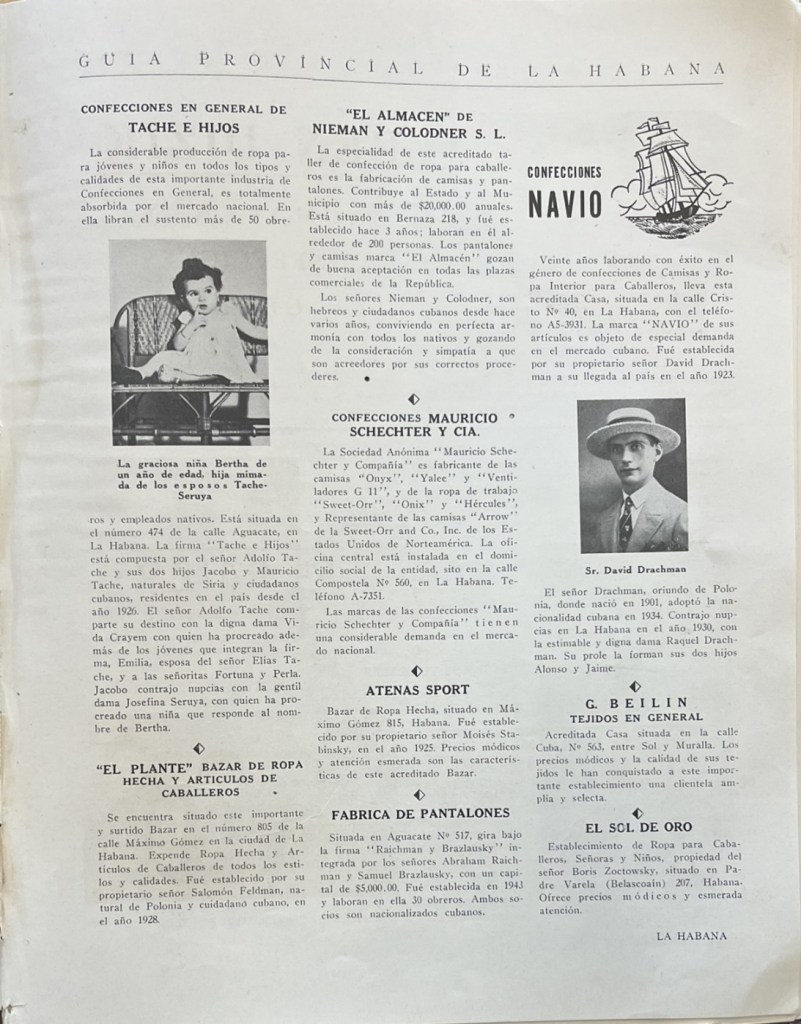
Here, one can see that the business could have been found at #474 Aguacate Street, Havana. It is also noted that the owners were Syrians who migrated to Cuba in 1926 and had since become Cuban citizens. As one reads through the guía, one can begin visualizing where the businesses were located, as well as the nationalities, whether Lithuanian, Spanish, or Syrian, amongst others of the migrants.
As for the Carteles, on top of the fact that they are simply gorgeous, issues such as the one featured here further contextualize the information such as those found in the previous source.
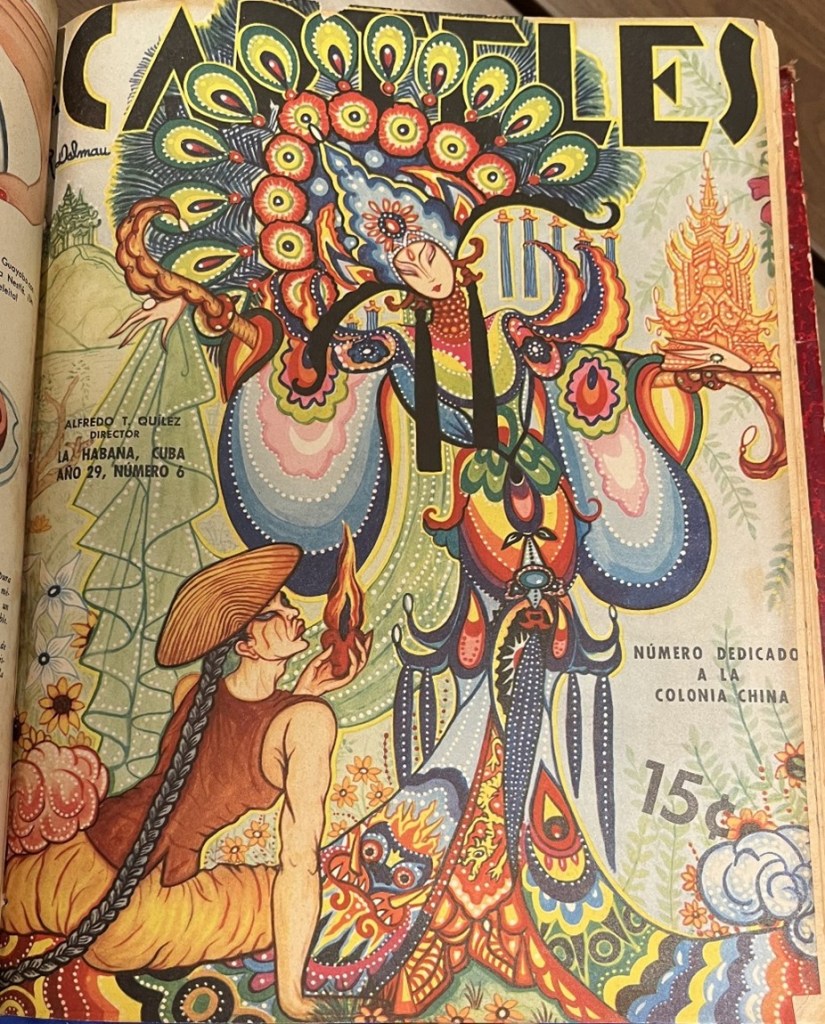
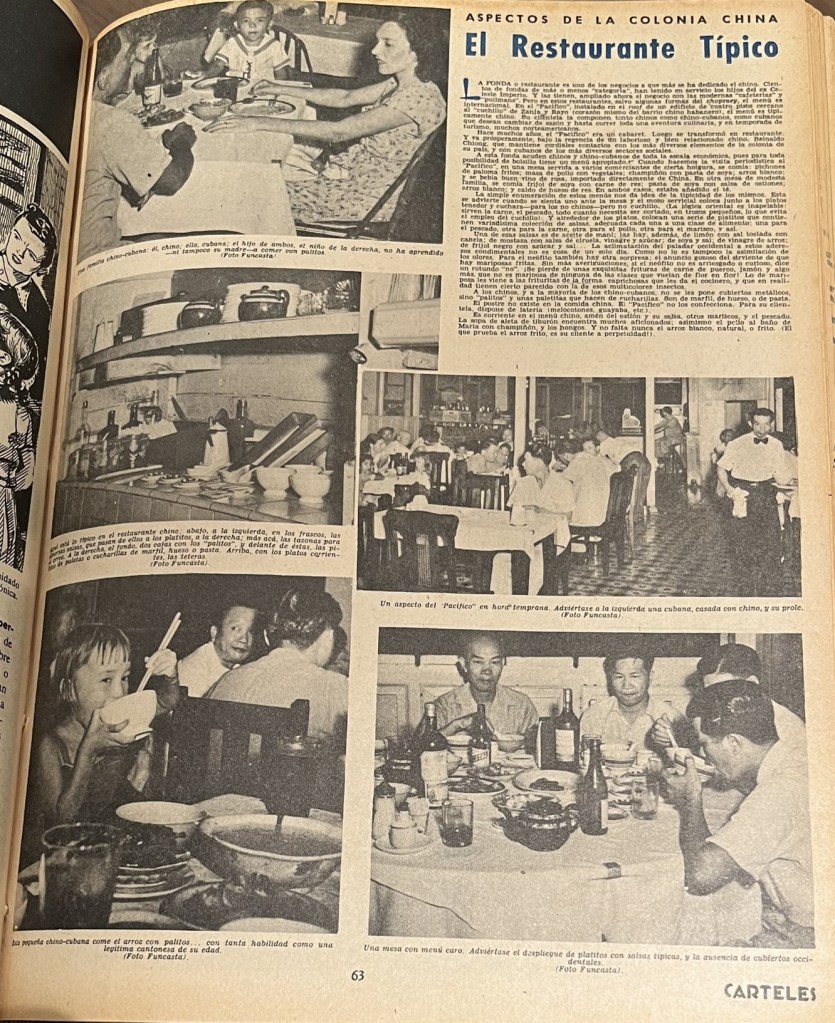
This issue dedicated to Chinese presence in Cuba provides details ranging from physical features of people of Cuban-Chinese heritage to Havana’s Chinatown. In it, readers are exposed to information about how these individuals established roots via channels including schools and commerce. For example, it is explained that the restaurant industry is one in which the Chinese community had most made its mark: “La fonda o restaurante es uno de los negocios a que más se ha dedicado el chino. Cientos de fondas de más o menos “categoría”, han tenido servicio los hijos del ex Celeste Imperio” (63).
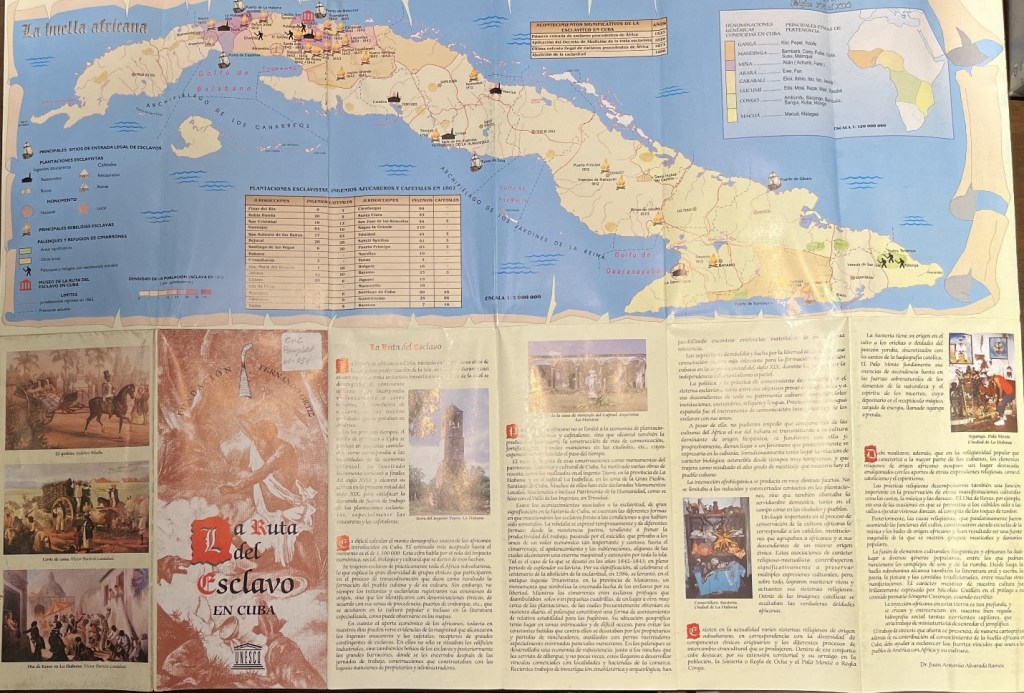
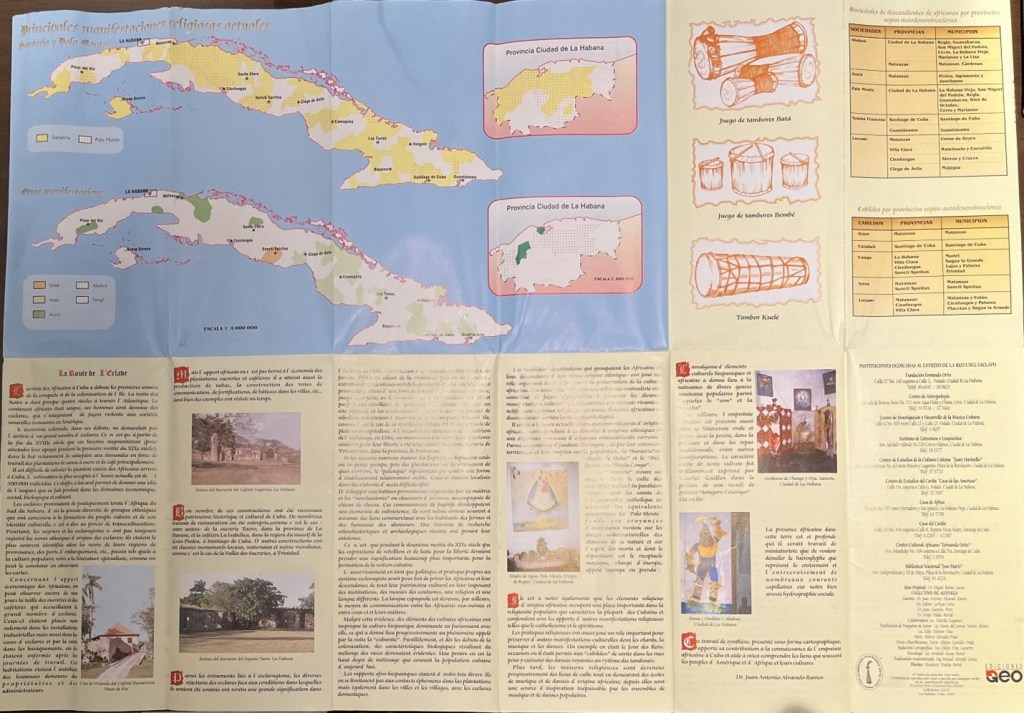
Pamphlets from the Fundación Fernando Ortiz were also helpful when it came to mapping out the migration and establishment of different diasporic communities to Cuba. Not only did they in some cases provide literal maps of where these communities found roots, but also the industries they may have worked in, as well as historical background as to why they may have migrated to Cuba in the first place. The following pamphlet in particular touches on these groups’ role in transculturation as it pertains to the development of Cuban culture. Of note is the fact that the pamphlets are printed in Spanish and at least one another language, such as this one that is printed in Spanish on one side and French on the other.
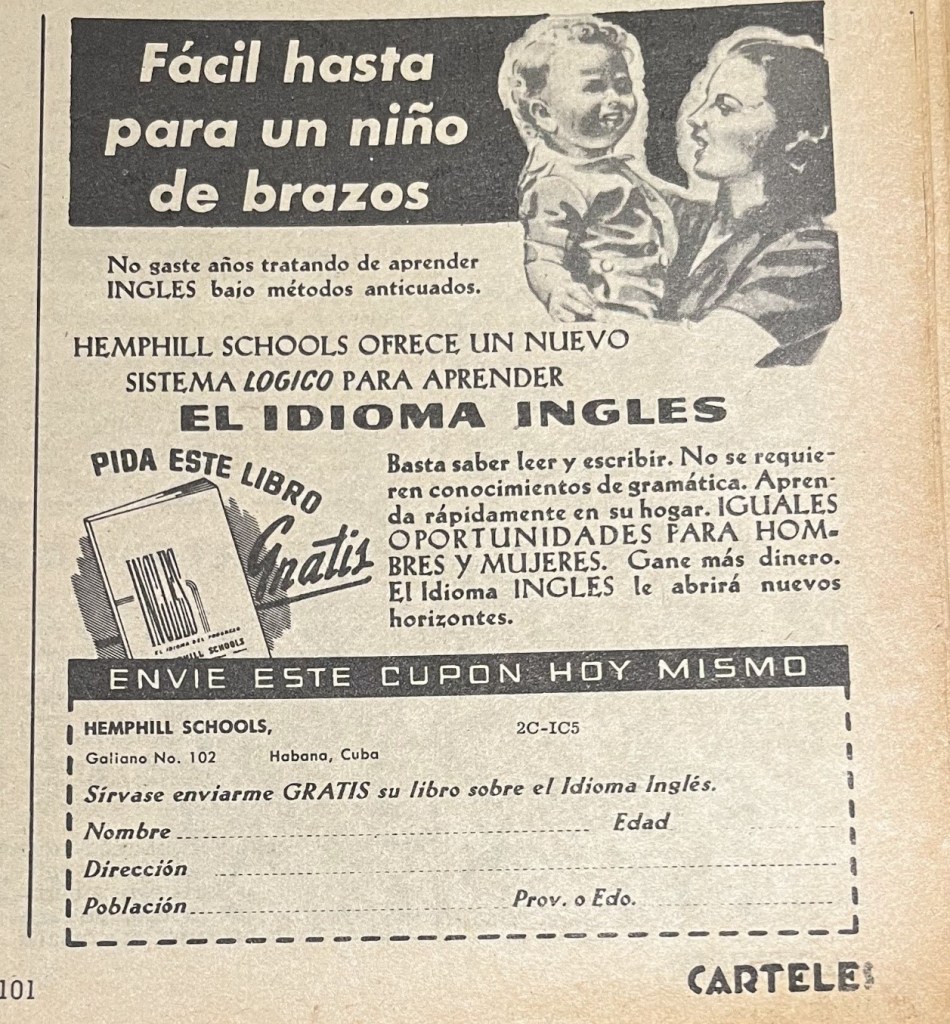
Speaking of languages…as a student of modern languages and literatures, I would be remiss to not mention the linguistic aspect that appeared at numerous occasions. Advertisements displayed an inclination towards the learning and teaching of English. Nonetheless, it is important to note that knowing English was not meant to be a replacement or improvement over Spanish, rather served as additional knowledge, displaying the importance in acquiring this language whether for professional gain or a means of social capital.
If only there was time to engage with everything that the collection has to offer! Nonetheless, I feel much more confident as I begin preparing my dissertation prospectus questioning cartographic representations of what it means to be Cuban and how this may translate to other communities (i.e. the United States) once Cubans emigrate there.
I express my sincerest appreciation for the assistance and guidance from the lovely staff at the CHC and look forward to further research at the collection.
 Cuban Heritage Collection Blog