The Cuban Heritage Collection will be featuring highlights from Goizueta Fellows’ research investigations conducted during their fellowships. Mariamnny Contreras-Fernández (@_pollotropical_), shares the following about her research on racial identity and medical discourse in Cuba and the broader Latin American diaspora between the late 19th and early 20th centuries.
Who Has the Cure?
During my fellowship with the Cuban Heritage Collection, the topic that most frequently emerged in conversations with my fellow researchers was how easily one could become absorbed by the countless materials available in the collection, and how, with each box we reviewed, a universe of possibilities opened up for expanding or diversifying the project we had arrived with. This phenomenon, so popular among academics, is known as “archive fever.”
My main objective during the months of residency at the University of Miami Libraries was the exhaustive review of Cuban periodical publications from the late 19th and early 20th centuries, a critical historical moment on the island, as it framed the wars that paved the way for independence from Spain, and with it, the construction of a Modern State and consolidation of a national identity. Moving between press headlines, advertisements for new police laws, and hygiene protocols, I found the necessary materials to reveal how literary and journalistic discourse not only reflected medical authority but actively manufactured it, and I was imbued by texts that led me back to Colonial Cuba. Without a doubt, I became feverish with the topic.
My dissertation is titled: “Witches and Doctors: Gender, Race and Medical Authority in 19th and 20th Century Cuba, Brazil and Venezuela,” and I take advantage of this systematizing space of experiences to tell you about a historical figure who lived in Cuba, and a group of other women who in the 1600s, as the song says, reveals the importance of the female healer and indigenous wisdom on the island, as well as the processes of criminalization of those who, not being white or European, could heal.
From the Indian Woman Who “Knew How to Make Good Cures” to the Black Sorcerers
“What nation in cultured Europe lacks its Dictionary of famous men?” (Calcagno, 1878 I. My translation) With this question, author Francisco Calcagno challenges us in his prologue to the Diccionario biográfico cubano, written and published in 1878. This text of more than 700 pages, describes in detail and meticulous manner, the profiles of illustrious personalities who, from the colonial period until the end of the 19th century, preceded us and dictated to us with their example the purest maxims of patriotism and philanthropy (Idem III. My translation). In this index—public display of civility according to its author’s words—appears registered the name of María Navas, the only healer with a biography in this inventory where doctors abound.
According to historical records, this woman was among the first group of people to legally function as doctors on the Island at the beginning of the 17th century; a time when there were no health professionals in Cuba who remained for long periods (Monzón Li et al., 2004, 20). However, despite the importance of her services to the Santiago de Cuba community, information about her is scarce beyond the record contained in the Cabildo books, in which she is delegated responsibility as a doctor. A record upon which Calcagno probably justified the lines can be read below:
NAVA (MARÍA).—Of Indian race; famous healer; from Santiago de Cuba around the year 1600, called by some The Witch. She cured Don Juan de Villaverde Ozeta, governor of the province, and this united with the circumstance that there was no doctor there, contributed to her great popularity. The credulous vulgar, as it has done later with others, attributed to her the power of miracles: hence the vulgar saying “more wise than la Nava” that until the end of the past century was used in the eastern department. (Calcagno 448. My translation)
Despite recognizing that Calcagno had the courtesy to consider including this woman, the only one of indigenous race reviewed in this Dictionary that is cited by many currently interested in revealing the participation of original communities in the development of medicine on the Island, we cannot overlook the tone the author uses to refer to “la Nava,” to whom from the beginning, Calcagno grants a series of derogatory categories that reinforces the negative image of women who heal in these territories that had been recently converted into Spanish colonies. The fame that the author confirms this healer had is immediately justified by the credulity of the population, who thought her miraculous, while not failing to mention that she was nicknamed by some as Witch, adding with this the ideological layer that this word carries with it. The mysterious and negative aura surrounding the practice of healing diseases with natural elements was not invented by Calcagno; nor is it a Caribbean tradition, but rather a response to the forced westernization of territories that became Spanish and Portuguese colonies in the 16th century.
Silvia Federici, in her book Caliban and the Witch: Women, the Body and Primitive Accumulation (2004) dedicates part of her book to analyzing how the installation of the imaginary of the witch woman in Europe goes hand in hand with the process of legitimization of the masculine figure of the doctor, who as a new authority with permission to exercise control over bodies, becomes a fundamental element in the State structure to ensure demographic growth and the necessary labor force for the production of goods and accumulation of profits. According to Federici, the women of France and England, who until the 16th century were the guardians of knowledge linked to women’s sexual health care, and served as midwives and companions, were drastically removed from the obstetric work they had been performing. At the beginning of the 17th century, the first male midwives appear, doctors who displace women from these spaces and allow the State to take control of obstetrics, prohibiting women from becoming involved in this task, to the point of beginning to consider home birth a savage act, “in the same way that enclosures expropriated communal lands from the peasantry, the witch hunt expropriated women’s bodies, which were thus ‘liberated’ from any obstacle that prevented them from functioning as machines for producing labor power”. (Federici 252. My translation)
This process that began in Europe found the necessary resources to justify its expansion to America from the chronicles and images coming from the New World, where the idea of the indigenous person as a savage, idolatrous, sodomite, and in some cases, cannibal being, was reinforced. Federici comments in this regard that: “As in Europe, the witch hunt was, above all, a means of dehumanization and, as such, the paradigmatic form of repression that served to justify slavery and genocide” (289. My translation) Just as persecuting women by labeling them as “witches” served them to remove from the path those who served the community and impeded the advance of the installation of the bourgeois state, during the colonial invasion in America, incorporating the healer woman or indigenous leader within this criminal category facilitated colonizers’ access to territories that from their beginnings showed themselves to be of crucial economic interest to the West.
In her thesis “Los negros esclavos y el tribunal de la Santa Inquisición en América (1570-1650)”, Ruth Magali Rosas Navarro conducts a historical reconstruction of the facts related to the foundation and functioning of the inquisitorial tribunals that were transplanted to America, making a special reading of the relationship of slaves with said institutions. We have that “The Inquisition was created in the Viceroyalty of Peru, and in that of New Spain, as an organ dependent on the Secretary of Aragon, by order of Philip II according to Royal Decree dated January 25, 1569” (Rosas 29. My translation) Its fundamental work together with the tribunal that would be added in Cartagena in 1610, was to detain those who intended to adulterate Catholic doctrine, eliminate Christians of Jewish origin who came to these lands fleeing persecution in Spain and “avoid the infiltration of Lutheran Reform, whose germs were brought by the corsairs who prowled the Caribbean islands and the Gulf of Mexico”(39. My translation). Based on data collected through the review of inquisitorial records and communications between monarchical and ecclesiastical authorities, Rosas consolidated a table with an essential number of Autos de Fe, a kind of public trials, that were carried out during the first half of the 17th century in Peru, as well as how in Mexico they also became spaces of mass attendance. It is through this reconstruction exercise that she detects a fact that resulted in the reconfiguration of the imprisonment criteria of the tribunals, an event that corresponds with the decade in which Maria Navas was designated doctor in Cuba, and that serves us as an antecedent of the subsequent decisions made regarding the control of health professionals in Cuba:
On July 19 of this year [1605], the Council of the Supreme issued a Royal Decree… in which the new agreements between the monarchs of Spain and England were highlighted…: “In the capitulations of the peace that were made between Our Lord the King and the King of England and Scotland, a clause was stipulated that says: ‘Because the laws of commerce that are achieved from peace do not become fruitless, as would happen if the subjects of the most serene King of England’ were molested for religious reasons in the domains of the King of Spain, he will provide so that they can go, trade and return without stain or fear”. (Rosas 42. My translation)
As we had mentioned, a large part of the trials carried out by the Holy Inquisition involved traitors to orthodox Catholic religion who practiced and preached heresy, therefore, with this communication, from 1605 the scenario is different for those in charge of enforcing justice: “the Inquisition was left only with the entertaining task of hunting sorcerers and witches, since the English heretics as well as the crypto Jews, were exempt from its jurisdiction”. (Rosas 42. My translation)
Ten years later in 1615, we find a document dated October 25, with the response that Bernardo Gutiérrez de Quirós, who by then was inquisitor of Mexico in New Spain, that read: “The agreed letter from Your Grace dated May 2 of this present year has been received so that proceedings be taken with rigor against astrologers, judiciaries and the other persons who use superstitions”. (Rosas 42) This succession of events creates an appearance of a breeding ground that facilitates the reproduction of discourse justifying the grave offense allegedly committed by those who handle and use ancestral knowledge for healing purposes in lands evangelized by the Catholic Church. However, until then, the number of men and women who appeared before the tribunal were mostly white, according to data collected in the thesis we have been citing, the consideration of slaves as merchandise and as “animals” even though some had been baptized at the time of leaving Africa, kept Black people off the inquisitorial radar, at least in New Spain and Lima. The case of Cartagena de Indias, the author comments, was different due to its demographic profile, servants of African ancestry or mulattos served as mediators between whites and indigenous people, and especially for the white female population and in some cases, women accused of witches were judged. (64-65)
Reviewing the “Relación de La Causa de Juana María, Mulata: esclava, mulata y hechicera” from the book Historia Inquisitorial de Una Mujer Novohispana Del Siglo XVIII, edited by Alma Leticia Mejía Gonzalez, we confirm the effort that the Holy Office invested in the persecution and resolution of cases where, like this one, a racialized woman inhabitant of the Villa de Santiago de la Monclova, in the province of Coahuila, was accused of witchcraft. The seventeenth century was characterized by an increase in cases of sorceresses presented before the Inquisition. In the interrogation they conducted with the slave Juana Maria when they apprehended her, she confessed that the arts of magic had been taught to her by an Indian woman, who was subsequently also detained and interrogated. About this event, it remains recorded that:
On October 17, 48 the Indian Gregoria, from the town of San Miguel, was examined by notary Rioja, having her already imprisoned, who appears to be the one cited above and declared under oath to have learned the art of witchcraft six years ago and that her teacher was the Indian Maria Diego and related with all its circumstances having appeared the Devil when she was taught to have denied the faith, sacraments, etcetera. (20. My translation)
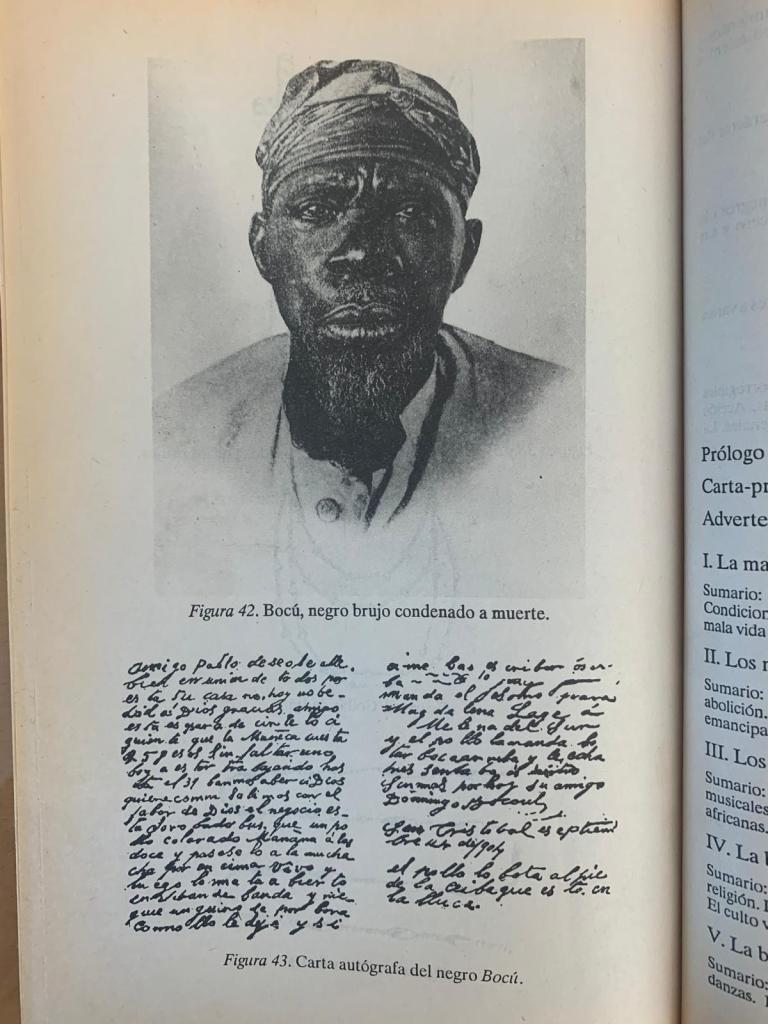
In this fragment that begins Gregoria’s confession, master in the occult arts, who was responsible for the knowledge that the mulatto Juana María handled and for which she was accused, we notice the collaborative quality of the relationships between slaves and indigenous women, who as we read in the relation of the cause—going beyond determining whether or not they had contact with the devil—shared among themselves the bases of their spiritual practices, drawing only in this case a genealogical line where we know of at least two indigenous women who preceded Juana. Likewise, the idea of the feminine condition inherent to whoever practices “witchcraft” is reinforced–at least in this first moment of history. What changed in the 19th century that motivated the State and the academy to spread a negative image of the Sorcerer, portraying a masculine and racialized character? How did this process unfold?
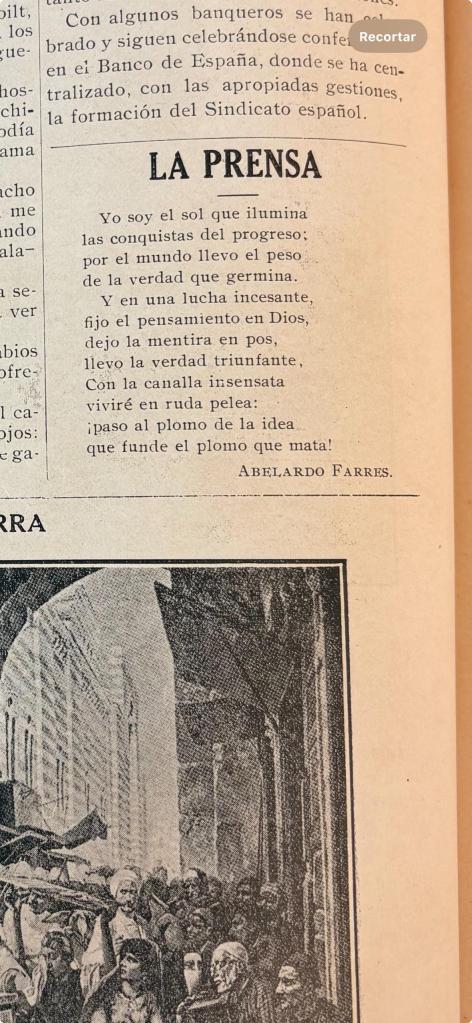
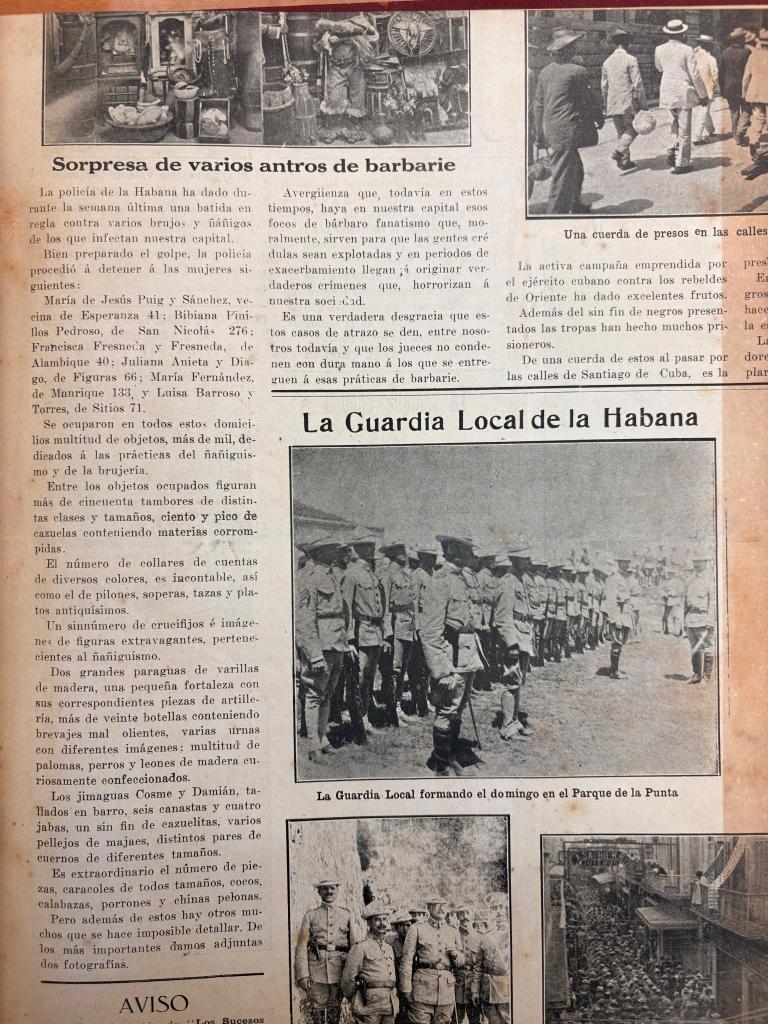
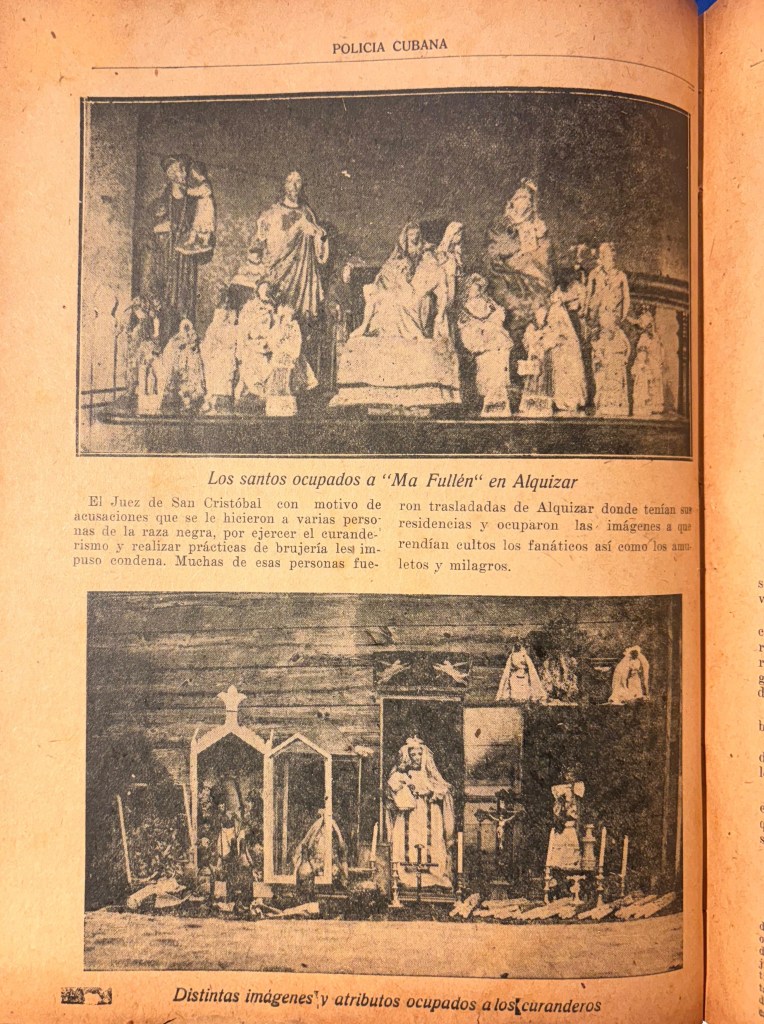
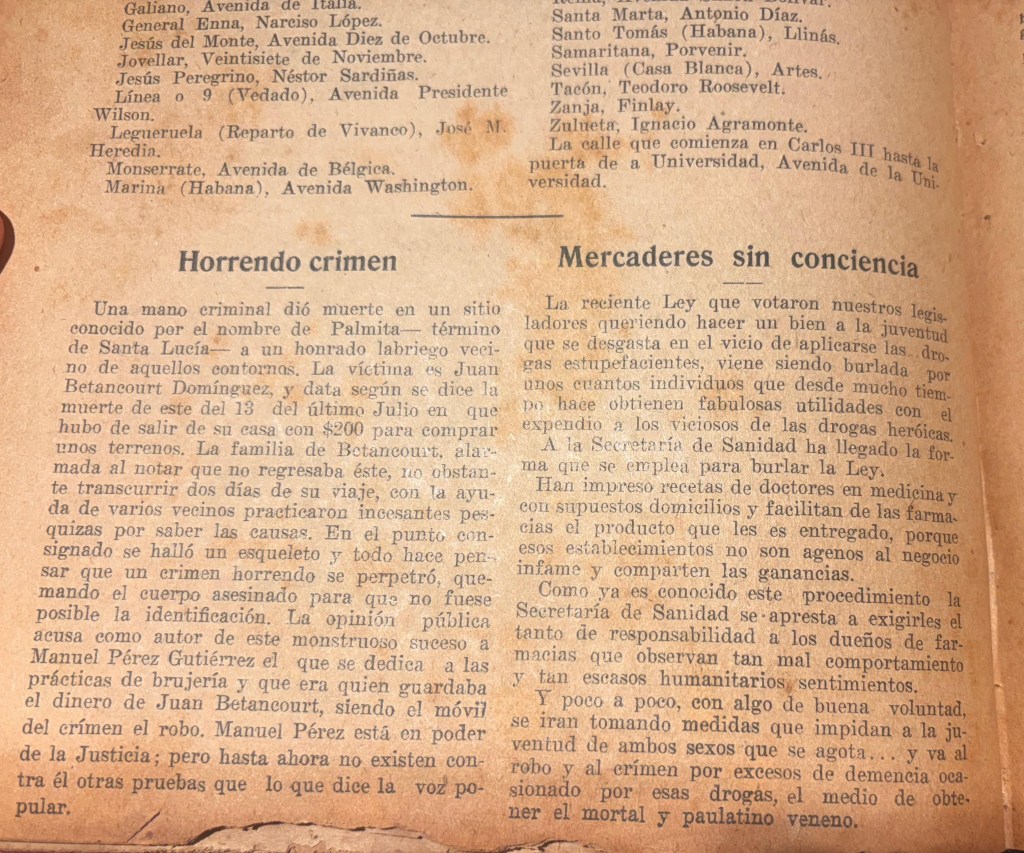
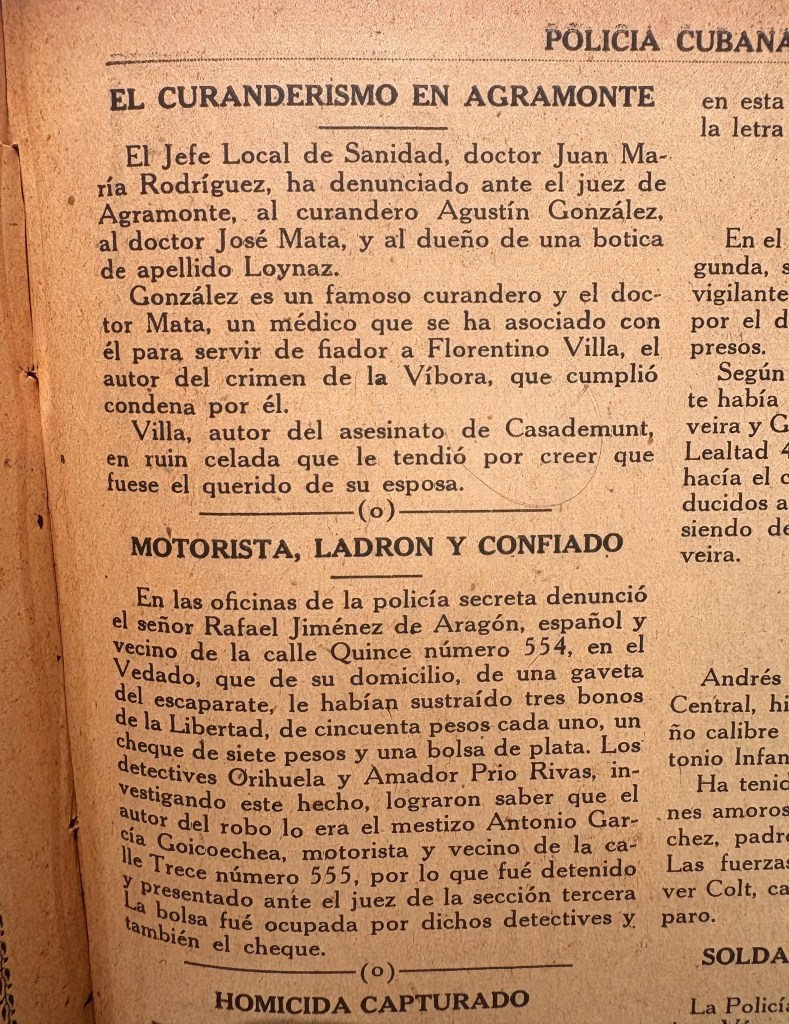
Right now, I find myself trying to answer this question. In the meantime, I am leaving you with part of the materials that, during the 19th-century period, reveal the expansion of State control and violence through the medical system, already institutionalized. And how not only the sick person became dangerous, as hygienic norms established, but also those who healed without being part of the aristocratic medical community.