
The Cuban Heritage Collection will be featuring reports authored by CHC Short-Term Research Grant awardees. These reports highlight insights from researchers’ short-term visits to the Collection. Here, PhD candidate Claudia Lonkin (New York University) shows how Cuba’s Panart record label, later nationalized into EGREM, was deeply embedded in global music, industrial, and intellectual-property networks that both shaped and survived the political upheavals of the Cold War and the Cuban Revolution.
During the Cold War, musical diplomacy fostered an international network supporting the production of vinyl records, the logistics of international tours and festivals, the negotiations behind international licensing agreements, and the management of state-run record shops. This network transcended state borders and crossed oceans, but it was founded upon earlier institutions and pre-existing relationships. During my Short Term Research Grant at the Cuban Heritage Collection last November, I examined materials related to Panart, the private company that was nationalized by the Castro regime in order to create Cuba’s state-run record company, la Empresa de Grabaciones y Ediciones Musicales (EGREM).
Founded in 1943 by the sound engineer Ramón S. Sabat (in whose name his company’s archive was generously donated to the CHC), Panart has always been deeply enmeshed in global networks of material exchange. Its record-pressing machines came from an earlier venture that Sabat had been involved with in New York, which folded when Indian shellac imports were cut off during World War II.[1] Connections to the United States persisted; until 1945, when Sabat bought the controlling interest, the main shareholder in Panart was the American-owned Cuban electric company, which sought to expand into consumer plastics.[2] While early releases were pressed onto shellac, Panart soon made the transition to vinyl. Upon its nationalization in 1961, the Cuban government forcefully inherited a fully converted vinyl-pressing plant, which it operated until 1997. Industrial machinery was not the only point of continuity between Panart and EGREM. While Ramón Sabat fled Cuba in 1961, his brother, Galo, who had been Panart’s manager since 1956, briefly remained in his managerial role at the request of the new regime, before following his brother to the United States.[3]
During my short, but exceptionally productive week working in the CHC collections, I was able to examine a wide variety of materials related to Panart, including vinyl records themselves, copyright information for the label’s extensive catalog, and Julia Riera Sabat’s biography of Ramón, her husband. These materials gave me an invaluable insight into not only the material networks behind the establishment of the Cuban recording industry, but also the more ephemeral experiences of record-listening and musical consumption in Cuba. Julia Sabat’s recounting of Panart’s struggle to stock its releases in fashionable department stores revealed to me the central role that young women played in taste-making in Cuba. Her stories of worker unrest at the Panart factory indicate that, though Panart was a relatively small, “light” industrial operation, it was still deeply affected by the evolving ideological tendencies of the Cuban Revolution.
Examining the copyright paperwork for releases that Panart both licensed to other record companies (or for which they purchased the licenses in turn) allowed me to map out the network of relationships between various Cuban record labels, distributors, studios, and their partners abroad. Even once Panart’s Havana factory was seized and the company had relocated to Florida, it still necessarily maintained contacts with institutions based in Cuba, as a matter of preserving artists’ rights. This note was of particular interest to me, as my research in Eastern Europe has also indicated that countries on both sides of the so-called “Iron Curtain” subscribed to international conventions on intellectual property, at least in the realm of musical authorship.
Finally, the vinyl records themselves, as well as Panart’s release catalogs, provide insight into how music was marketed and distributed. Variances in packaging tell a story of evolving supply chains and changing production standards. Some releases are produced in collaboration with the Cuban Tourist Commission, which hints at both state intervention on musical production, and the commodification of culture.
The networks and market that Panart established persisted even through their own appropriation—some of them are still extant today. It is thanks to the efforts of the CHC that this chapter in Cuban history, which reveals Cubans as influential global actors in the international production of recorded music, is available to us today.
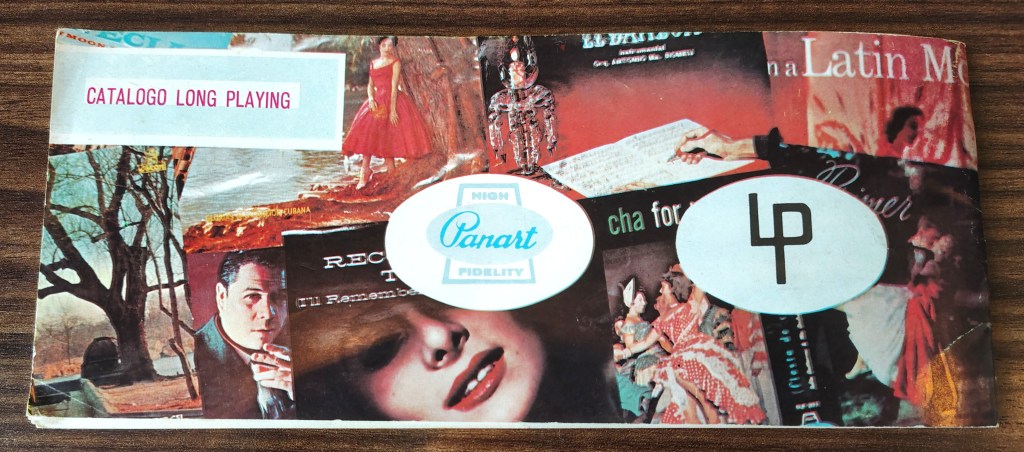
Panart High Fidelity, “Catalogo Long Playing,” October 1960. Ramón S. Sabat (1902-1986) Panart Collection, CHC0149, box 1.
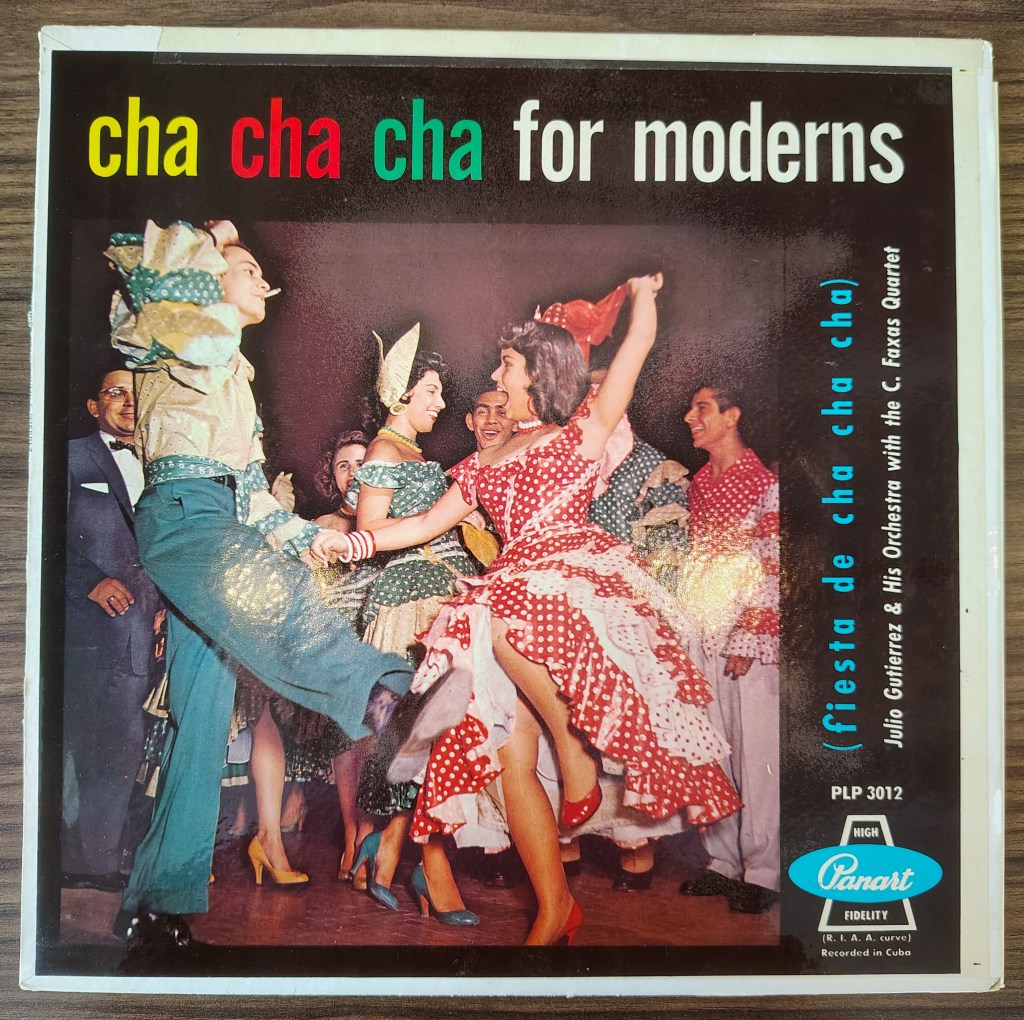
Julio Gutierrez & His Orchestra with the C. Faxas Quartet, Cha Cha Cha for Moderns (Fiesta de Cha Cha), (Havana, Cuba: Panart PLP-3012, 1956). Ramón S. Sabat (1902-1986) Panart Collection, CHC0149, box 2. This record was produced with the seal of the Cuban Tourist Commission.
[1] Judy Cantor, “When Cuba Sang,” Miami New Times, 26 December, 1996.
[2] Cornelius Schlicke, Tonträgerindustrie und Vermittlung von Livemusik in Kuba: Populäre Musik im Kontext ökonomischer Organisationsformen und kulturpolitischer Ideologien (Berlin: Lit Verlag, 2007), 26.
[3] Cantor, “When Cuba Sang.”
 Cuban Heritage Collection Blog