
The Cuban Heritage Collection will be featuring reports authored by CHC Short-Term Research Grant awardees. These reports highlight insights from researchers’ short-term visits to the Collection. Here, Dr. Daniel Pedreira discusses how he used the CHC’s holdings to produce a comprehensive biography of Manuel Antonio (Tony) de Varona, highlighting de Varona’s role in shaping Cuban democratic thought both before and after exile while challenging narratives that marginalize exile leadership in Cuban history.
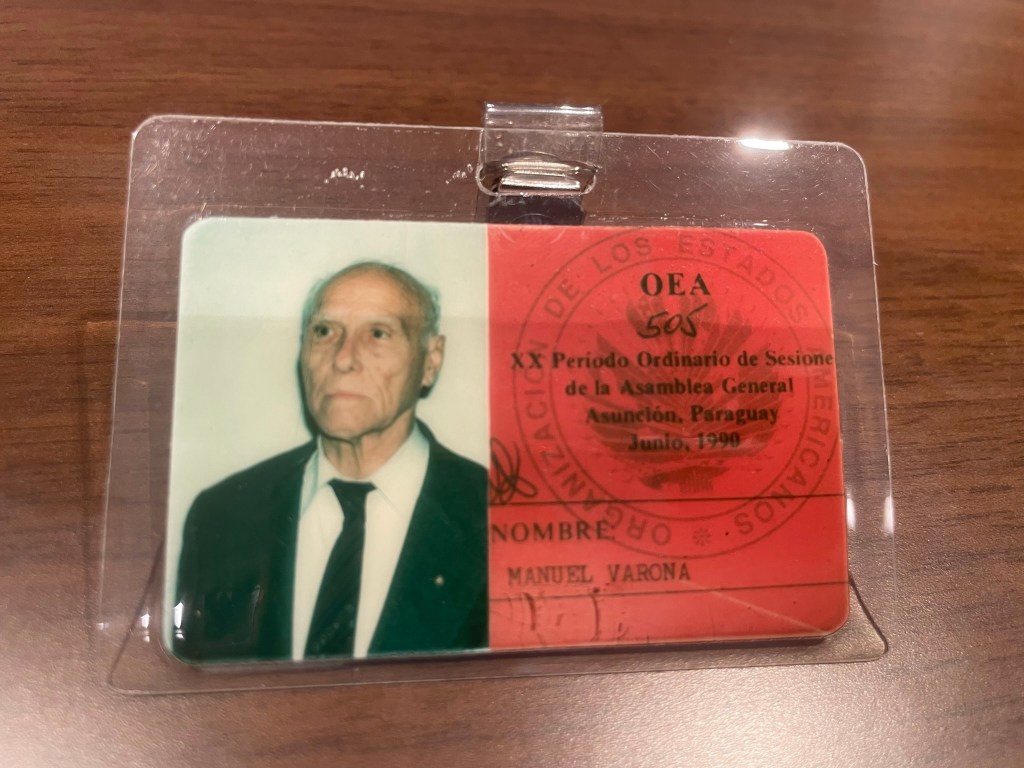
My research on Manuel Antonio (Tony) de Varona—a key figure in Cuban political history—has significantly contributed towards my work on a comprehensive biography that explores his life, career, and enduring impact on Cuban democratic thought. De Varona was a central actor in Cuba’s mid-20th-century political landscape, serving as Prime Minister and President of the Senate before the 1959 revolution. In exile, he became a leading voice in the opposition to Fidel Castro’s regime, advocating for the restoration of democracy in Cuba and helping shape the political discourse of the Cuban diaspora.
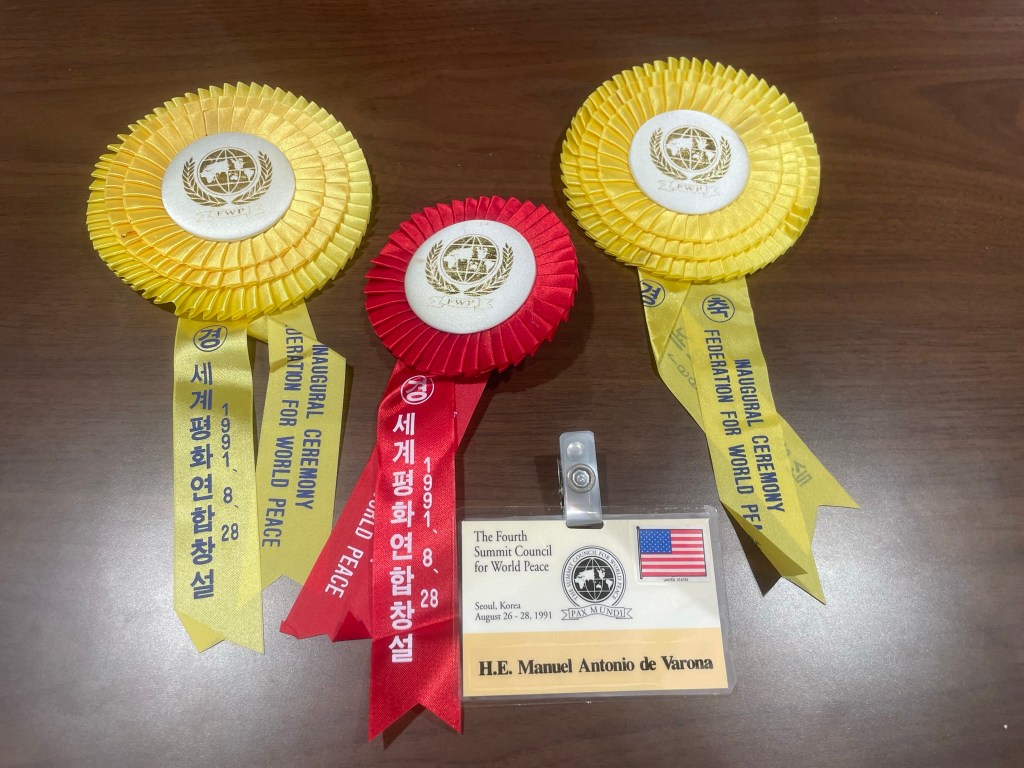
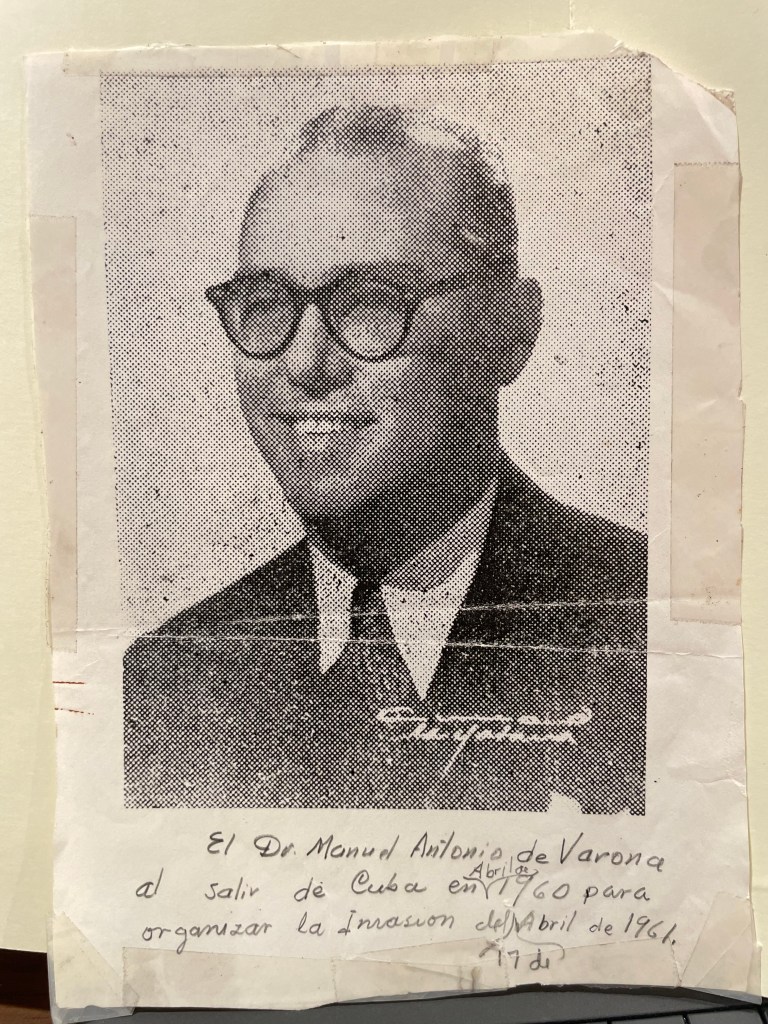
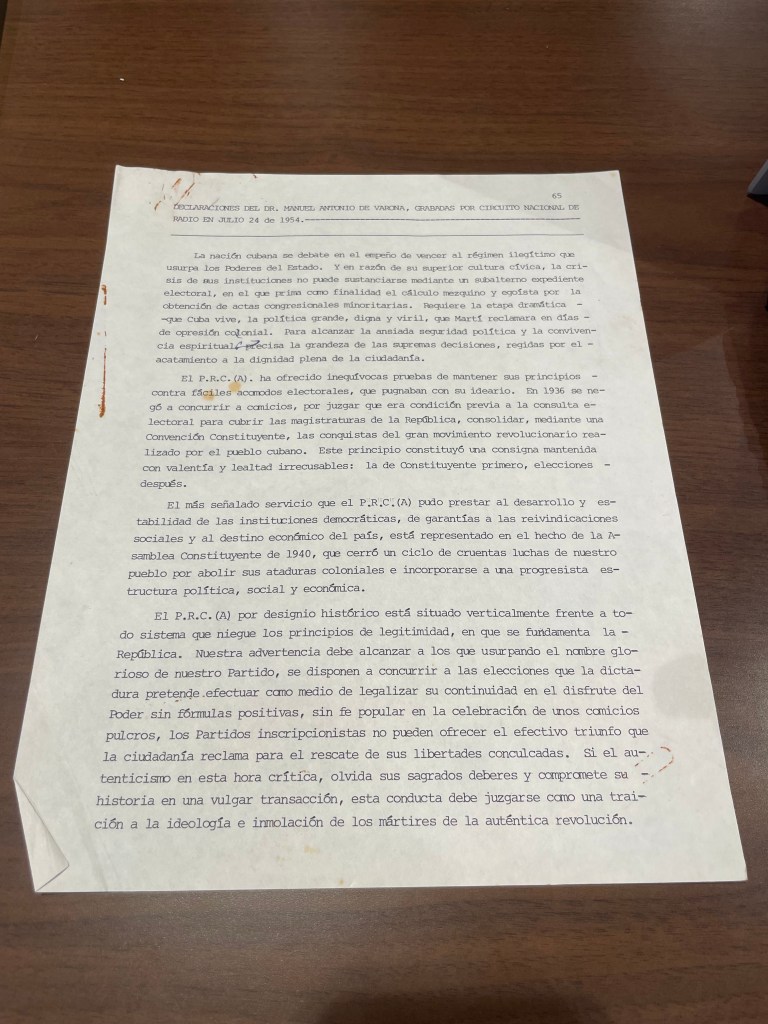
The Cuban Heritage Collection (CHC) at the University of Miami was instrumental in supporting this research. The CHC’s extensive holdings provided access to rare and invaluable primary sources, including the Tony de Varona Papers. These archives contain personal correspondence, speeches, legislative records, photographs, and unpublished manuscripts that were essential in reconstructing de Varona’s political philosophy and strategic thinking. The materials allowed me to trace his evolution from a reformist politician in pre-revolutionary Cuba to a committed exile leader working to preserve Cuba’s democratic ideals abroad.
Beyond the de Varona Papers, the CHC’s curated collections of newspapers, magazines, correspondence, and political ephemera enriched my understanding of the broader historical context. I also found valuable documents in the Agustín Acosta, Carlos Márquez-Sterling, Antonio Maceo Mackle, and Rafael Risco Papers. These resources illuminated the dynamics of Cuban political culture, the complexities of U.S.-Cuba relations, and the internal debates within the exile community. The CHC’s knowledgeable staff provided critical guidance in navigating these collections, helping me uncover connections and narratives that might otherwise have remained hidden.
The primary outcome of this research is a forthcoming full-length biography of Tony de Varona, which will contribute to the political historiography of Cuban politics and exile activism. I also plan on presenting preliminary findings at academic conferences and public lectures, and I will develop digital content to make aspects of de Varona’s legacy more accessible to scholars and the public. This work challenges contemporary narratives that often overlook the contributions of exile leaders, positioning de Varona as a bridge between Cuba’s democratic aspirations and its exile struggles.
Importantly, my time at the CHC also led to the discovery of materials related to other notable Cuban political and cultural figures. These findings have opened new avenues for future research and writing projects, including additional biographies and historical studies. I plan to begin work on these projects in the near future, further expanding the scholarly and public understanding of Cuba’s complex political history and the contributions of its diaspora.
In sum, the CHC’s collections were foundational to the success of this biography and have laid the groundwork for future publications that will continue to explore Cuba’s democratic legacy and the role of exile communities in preserving and promoting it.
Through my research, I was able to challenge prevailing narratives that often marginalize or oversimplify the role of exile leaders in Cuban history. Tony de Varona’s life story offers a lens through which to examine themes of exile, resistance, and identity—issues that remain deeply relevant today.
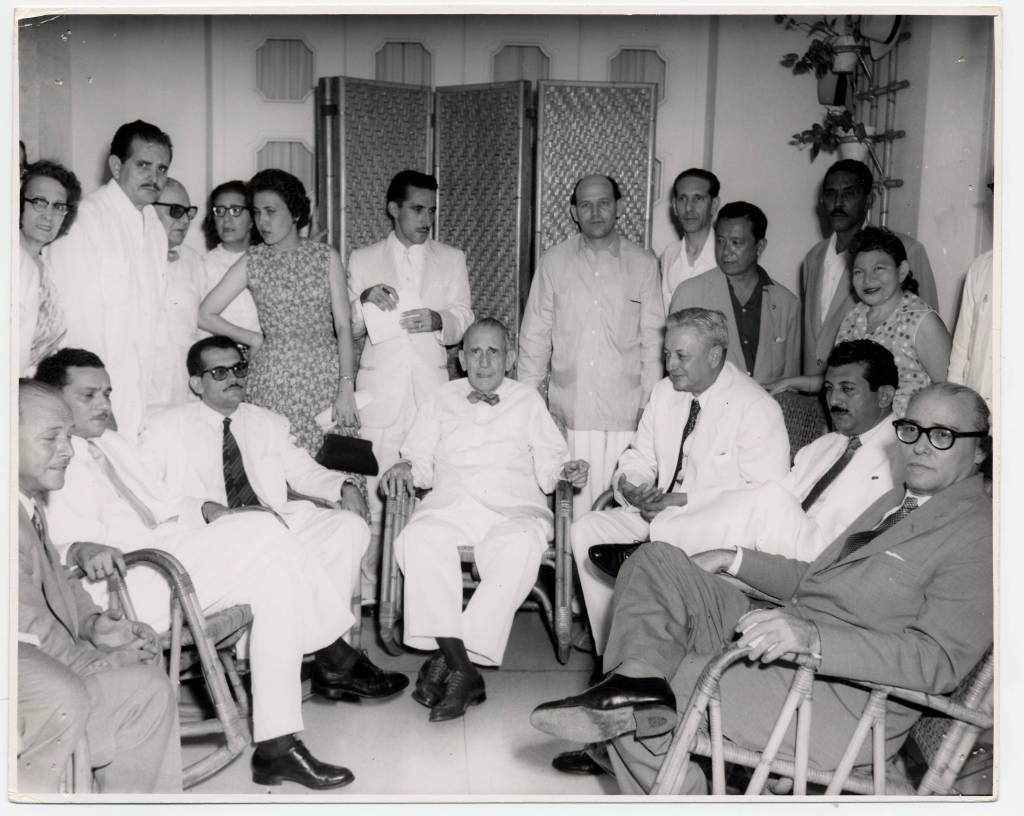
Group at Ramón Grau San Martín’s home. Ramón Grau San Martín is seated at center with José R. Andreu, former Minister of Public Health, to his right. Seated at far right is Tony Varona, Cuba’s Prime Minister under Carlos Prío Socarras. Image from Polita Grau de Agüero Papers, Cuban Heritage Collection.
 Cuban Heritage Collection Blog