
The Cuban Heritage Collection is pleased to share a guest post by photographer and writer Lorenzo DeStefano on his forthcoming book The Magic Hour: A Photographer’s Journeys Through Cuba, to be released by Amaurea Press on July 23, 2026. Drawing on DeStefano’s travels across Cuba during the Special Period (1993–1998), the bilingual volume features 123 black-and-white photographs and offers a personal portrait of everyday life, resilience, and friendship on the island; many of these images are drawn from the Cubanos–Island Portraits 1993–1998 series, which was donated to the Cuban Heritage Collection as part of DeStefano’s papers in 2021. Read on to learn more about The Magic Hour and hear DeStefano’s reflections on photographing Cuba during a pivotal moment in the island’s history.
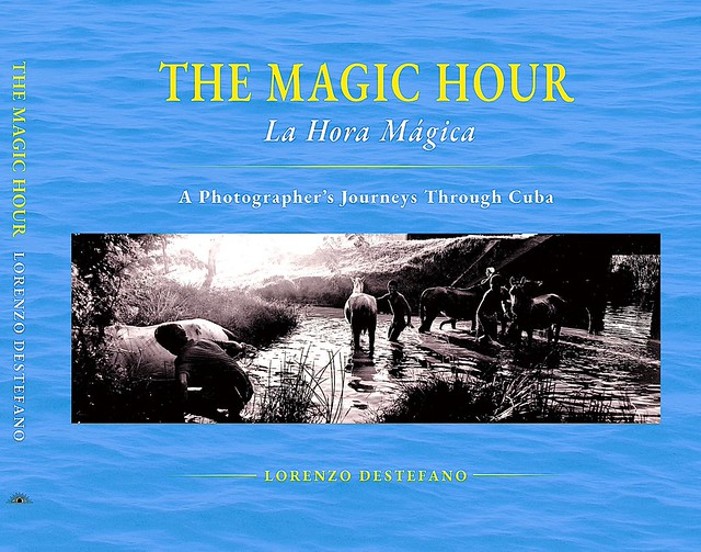
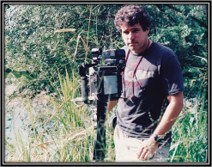
“THE MAGIC HOUR – A PHOTOGRAPHER’S JOURNEYS THROUGH CUBA” is Hawai’i-born writer/photographer Lorenzo DeStefano’s chronicle of his coverage of Cuba between 1993 and 1998, during “El Período Especial” in modern Cuban social, economic, and cultural history. This “special period” began in 1991, after the fall of Soviet Communism when, like today, hard times threatened to bring the highly dependent Cuban economy and its long-suffering people to their knees.
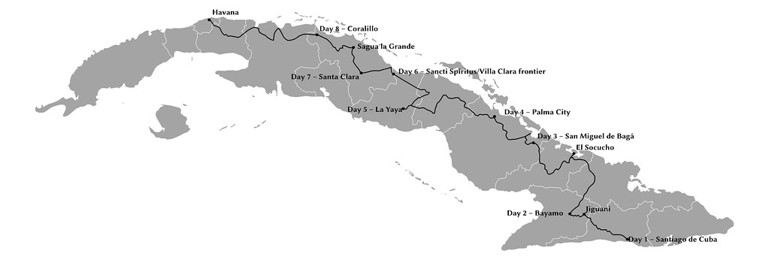
Focused primarily on a rugged, breakdown-plagued seven-day, cross-country journey from Santiago to Havana in a beat up 1952 Willy’s Jeep, affectionately known as “El Jeepy”, DeStefano was joined by his Cuban friend and driver Juan de Mata Montero Reyes. Together they encounter remote villagers, urban dwellers, Santería priests, and underage prostitutes.
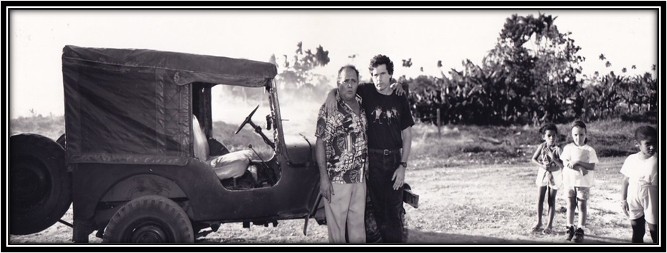
Lorenzo’s friendship with Juan de Mata is at the center of this book, which covers a variety of subjects including global politics, the ethics of making art, and the rights of man. Their road trip cements a deep, cross-cultural friendship between two men of different generations, united by their both being born of islands.
DeStefano’s text and his camera unite and inform this complex place and its resilient people. Expanding beyond the personal to a true panoramic of contemporary Cuban life, keeping one eye on the viewfinder and the other on the reality he is photographing, DeStefano powerfully conveys his impressions, his bewilderment, and his anxiety as an American traveling under the radar of official government permission. The book records DeStefano’s largely improvised route and the memorable people, places, and images encountered as he and Juan de Mata ventured through the provinces of Santiago de Cuba (Santiago, El Cobre, Contramaestra), Granma (Jiguani, Bayamo), Guantanamo (Guantanamo, Cabañas, Baracoa), Holguín (Moa, Velasco), Las Tunas (Las Tunas, Puerto Padre, El Socucho), Camagüey (Nuevitas, Sola, Minas, Esmeralda, Palma City), Ciego de Avila (Chambas), Villa Clara (Sancti Spiritus, Placetas, Santa Clara, Sagua la Grande, Corralillo), Matanzas (La Yaya, Cárdenas), and finally, La Habana.
Within the constantly shifting currents of global politics, Cuba has occupied an especially prominent place for nearly seventy years, since the revolution of 1959. Life and politics on this controversial island continues to unnerve America and captivate the world. The Cuban people’s ongoing ideological struggle and search for a defining national identity remains of great importance to the vast human landscape that writers and photographers persistently document, because it is there.
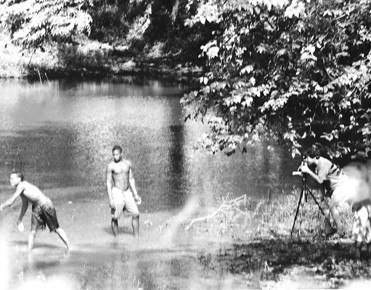
“As a photographer I am after that fragment of time when people’s gaze meets mine, when the lens reveals life beneath the exterior. As someone born and raised in Hawai’i, almost 5,000 miles away from this island in the Caribbean, I felt an immediate affinity with Cubans and with their native landscape. Moving beyond divisive ideologies and the limitations of language, my focus was the world of everyday citizens. More than thirty years ago, these journeys marked my reawakening as a photographer after having redirected my energies more to writing, theater and filmmaking, disciplines that I remain very engaged in today.”
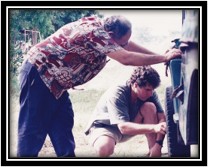
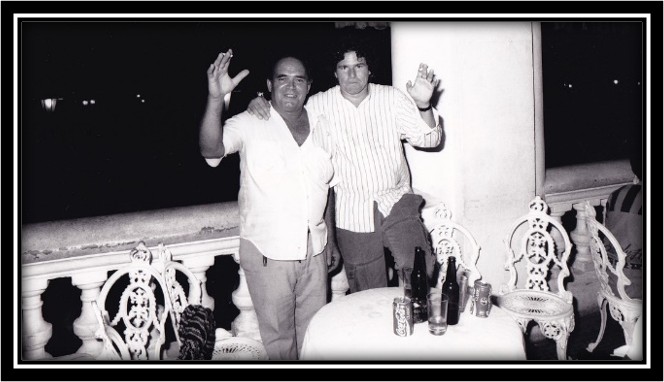
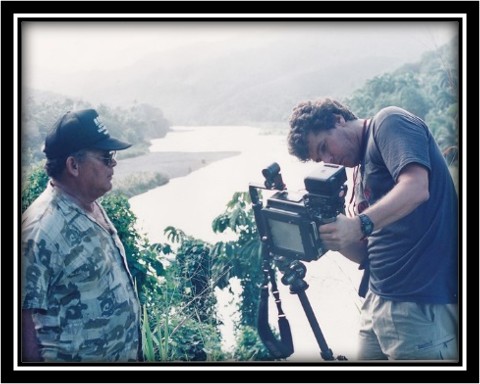
The Magic Hour provides a much-needed alternative view of life on this island. Moving past easy definitions and self-serving political agendas, DeStefano’s words and pictures show us much more than a land of rum, cigars, and vintage American cars.
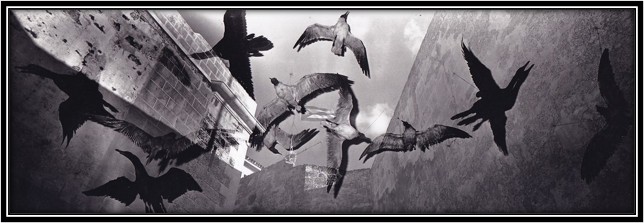
For many of us on the outside, especially Americans, it remains difficult to penetrate beneath the cultural stereotypes that we see about Cuba in print and in broadcast media. Everyone seems to have a horse in this race and seeks, for a variety of reasons, to define for others what it is the island and its policies actually mean. Most foreign news outlets are still delivering the decades-old “wait and see” attitude towards Cuban affairs, showing little or nothing of the way life really is. Their slant on stories, even after Pope John Paul II’s visit in 1998 and President Obama’s historic visit in 2016, remains overtly judgmental and paternalistic.
“THE MAGIC HOUR” is, by contrast, a deeply personal reminder that Cuba’s nearly eleven million people, despite their touristic appeal as purveyors of mojitos, daiquiris, and rhythmic music and dance, are constantly in the midst of convulsive change, and never more than they are today, as events in Venezuela have ratcheted up the pressure.
Reports of how troubling things are in Cuba these days, as well as first person information DeStefano is getting from his many friends there, testify to another ominous “special period” in the country’s long and tumultuous history. Many people in Cuba feel that any change from the present situation would be good. Others are more skeptical and understandably wary of outside influences bearing down on them at this precarious time. No matter what their levels of anxiety or loyalty to the regime and its past, present, and future ideals, everyone seems united by their collective uncertainty caused by the increasing scarcity of goods and services needed to meet basic human needs. It’s anybody’s guess where things will be in the near future. Perhaps a whole new “world order” is already being put in place.
In focusing on his friendship with Juan de Mata, DeStefano manages to bridge the gap between what we see and what we think we know about this unique island nation ninety miles from the southeastern shore of the United States. With the perpetual global interest in all things Cuban, “THE MAGIC HOUR” is extremely well-timed historically. It has the potential to find a strong audience among the general public, students, photographers, museum curators, educators, and Cuban and Caribbean historians and scholars of all persuasions.
These photographs are from a larger collection titled “CUBANOS-ISLAND PORTRAITS / CUBANOS – RETRATOS DE LA ISLA 1993-1998”, acquired in 2021 by the University of Miami’s Cuban Heritage Collection. DeStefano’s work is also in the Permanent Collection of MOLAA, the Museum of Latin American Art in Long Beach, California. Many of the images are also in private and public collections and have been exhibited extensively in Cuba and in major gallery shows in New York, London, Los Angeles, Long Beach, Chicago and Vancouver as well as in print, music, film, and broadcast media.

